
Author: R&D Team, CUIGUAI Flavoring
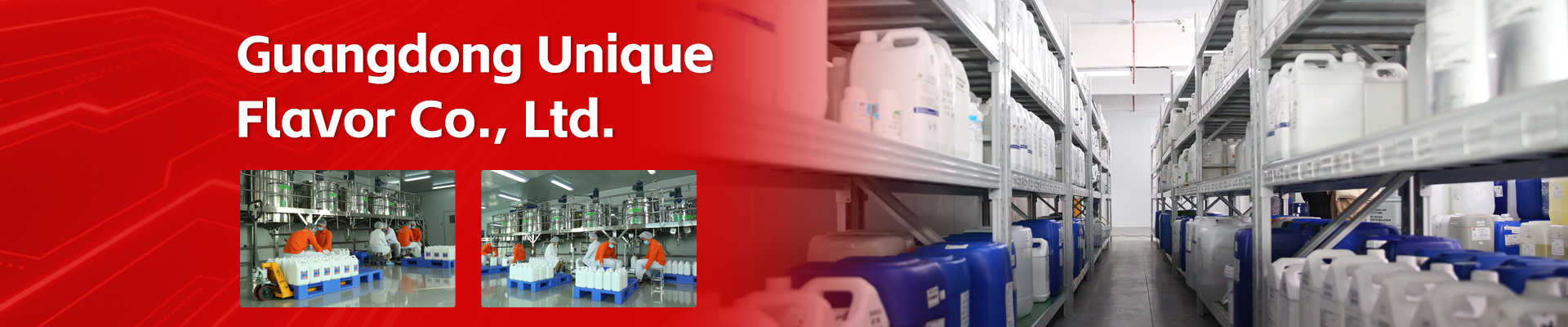
Published by: Guangdong Unique Flavor Co., Ltd.
Last Updated: Mar 05, 2026

Flavor Chemist Lab
In the modern, highly competitive food and beverage landscape, the distance between a concept and a market leader is often measured by technical precision. A flavor profile isn’t merely a component listed on an ingredient deck; it is the core determinant of consumer acceptance, brand loyalty, and repetitive purchasing behavior. While selecting the optimal flavor profile is a critical first step, the chemical and physical journey that flavor takes from manufacturing through processing, stability testing, and ultimately to the consumer’s palate is fraught with technical challenges.
At CUIGUAI Flavor, we operate under a foundational philosophy: we are not just a supplier of chemical compounds; we are application partners. Our commitment to your brand’s success does not terminate when a shipment of flavoring leaves our facility; rather, it transitions into a crucial phase of technical support and collaborative application science. This post-delivery support is engineered to ensure that the flavor profile we developed together translates flawlessly into your final product matrix under real-world processing conditions.
The application of flavorings is an intricate science governed by thermodynamics, food chemistry, and process engineering. Many flavors are complex mixtures of volatile organic compounds, including esters, aldehydes, ketones, and terpenes, each with unique vapor pressures, stability profiles, and interaction potential with macronutrients. A failure to manage these variables post-delivery can lead to flavor scalping, off-note development, or total flavor collapse.
This comprehensive guide details the technical support framework we provide to ensure your flavor application is optimized, stable, and compliant, securing the sensory integrity of your product throughout its shelf life.
One of the most frequent post-delivery challenges our partners face is “matrix interaction.” A flavor that exhibits a perfect organoleptic profile in a neutral screening solution may behave dramatically differently when introduced into a complex food or beverage matrix.
The presence of fats, proteins, carbohydrates, and emulsifiers creates a dynamic environment where flavor compounds partition based on their hydrophobicity or hydrophilicity. For instance, in a high-protein beverage, certain hydrophobic flavor components may bind tightly to protein hydrophobes, significantly reducing their volatility and perception on the palate. Conversely, in low-fat systems, flavor release can be accelerated, leading to an intense but fleeting sensory experience or the unmasking of metallic or bitter off-notes from fortificants.
Our post-delivery support focuses heavily on deciphering these interactions. If your product is exhibiting sensory deviations during early production batches, our application team does not simply recommend increasing the dosage—a costly and often ineffective approach.
Instead, we employ analytical strategies to understand the binding dynamics at play. We assist in evaluating how different ingredients—such as stabilizers (hydrocolloids like xanthan or guar gum), alternative proteins (pea, soy, rice), or novel sweeteners—impact the flavor’s thermodynamic activity. By understanding the partition coefficients (K) of key flavor markers within your specific matrix, we can recommend precise adjustments to the flavor matrix or the product formulation itself to achieve the desired sensory release.
Most food and beverage products require some form of thermal processing for microbial safety and shelf-life extension. These processes—which range from HTST (High-Temperature Short-Time) pasteurization to UHT (Ultra-High Temperature) processing, aseptic filling, baking, and extrusion—introduce severe thermal stress that can be catastrophic for volatile flavor compounds.
Thermal degradation occurs through various chemical pathways, including oxidation, hydrolysis, polymerization, and the Maillard reaction. For example, delicate citral compounds responsible for lemon notes are highly susceptible to acid-catalyzed hydrolysis, leading to the formation of off-notes like p-cymene and alpha-terpineol, which impart a “soapy” or “terpeney” character.
Our technical support team provides crucial assistance in managing thermal abuse. We engage directly with your process engineers to understand the specific time-temperature parameters of your production line. This allows us to provide evidence-based guidance on:
According to a review of encapsulation technologies in food applications, the proper selection of wall materials and encapsulation methods (such as spray drying or coacervation) can significantly improve the retention of volatile flavor compounds during high-temperature processing [1].

Flavor Stabilization
The greatest challenge facing a food product is often time. As a product sits on the shelf, a continuous series of chemical reactions takes place that alters its sensory profile. Oxidation is the primary culprit behind the degradation of fats and many flavor compounds, leading to rancidity and “cardboard” off-notes. Furthermore, interaction between flavor compounds and the packaging material itself can occur.
Our commitment to stability testing is a central component of our post-delivery support. We recognize that few of our partners have the resources or time for real-time shelf-life testing. We provide support through:
The importance of accurate sensory and shelf-life analysis is underscored by organizations such as the Institute of Food Technologists (IFT), which emphasizes that comprehensive shelf-life testing must account for sensory, chemical, and physical changes, not just microbiological stability [2]. This authoritative stance highlights why technical partnerships are essential for determining the sensory deadline of a product.
Perhaps the most critical moment for a new product is the transition from a 1-liter R&D benchtop sample to a 1,000-gallon initial production run. This process, known as scaling, is notoriously complex. Phenomena such as mixing dynamics, heat transfer efficiency, and shear forces change dramatically as volume increases.
A common issue in scale-up is achieving uniform flavor dispersion. In large blending tanks, improper mixing can create flavor hotspots or, conversely, areas with inadequate flavor concentration. For highly viscous products or those requiring emulsions, this challenge is magnified.
Our engineers are available for post-delivery consultation regarding the physics of flavor dispersion. We assist in evaluating:
The final hurdle for flavor integrity is the packaging. Packaging materials are rarely inert. Interaction between the product and the package can lead to flavor loss through two primary mechanisms: absorption and permeation.
Our post-delivery support includes evaluating the potential for flavor scalping. While we do not manufacture packaging, we understand the chemistry behind these interactions. We can analyze the final product over time to detect if specific flavor components are diminishing due to scalping. This information is invaluable when working with packaging suppliers to select material combinations with superior barrier properties, such as those incorporating EVOH (ethylene vinyl alcohol) or aluminum foil layers, specifically designed to mitigate volatile organic compound (VOC) loss.
The severity of flavor scalping by packaging materials, particularly by polymers like polyethylene, has been widely documented in packaging science, demonstrating that it can result in significant changes to the aroma profile of food products, often within just days of packaging [3]. Addressing this early prevents consumer complaints further down the line.

Micro-Emulsion View
The global regulatory framework for flavorings—governed by the FDA (Food and Drug Administration) in the United States, EFSA (European Food Safety Authority) in the EU, and other local bodies—is inherently dynamic. Ensuring continuous compliance post-delivery is essential for market stability.
We provide robust regulatory support to ensure that the flavoring system in your final product remains compliant. This includes:
The US Food and Drug Administration (FDA) provides strict guidelines under 21 CFR 101.22 regarding the labeling of food flavorings. It is crucial for manufacturers to understand that the classification of a flavoring—whether it is ‘natural,’ ‘artificial,’ or ‘natural with other natural flavors (WONF)’—must be accurately reflected on the final product label to avoid misbranding [4]. We ensure that our post-delivery documentation gives you the precise information needed to remain in compliance with these complex standards.
Despite all precautions, sometimes products develop unexpected sensory deviations. These are known as “off-notes.” Off-notes can arise from environmental contamination, processing issues (over-heating), or unexpected chemical interactions between ingredients.
When an off-note appears, we approach it as flavor forensics. Our advanced analytical labs are available for diagnostics. We don’t just ask if the flavor is bad; we look for the chemical fingerprint of the off-note. Using GC-MS/O (Gas Chromatography-Mass Spectrometry-Olfactometry), where a human assessor detects the sensory character of each separated volatile component, we can identify the specific chemical responsible for the off-note.
By identifying the chemical cause, we can trace the off-note to its source—whether it’s an oxidation product of a carrier solvent, a Maillard reaction by-product, or a contaminant from the packaging material itself. This definitive diagnostic approach allows for rapid, effective remediation rather than time-consuming, trial-and-error attempts.
Ultimately, the consumer’s perception is the only metric that matters. To make data-driven decisions during troubleshooting or process optimization, objective sensory analysis is required.
Our technical support extends to training your internal teams in sensory methodologies. If you are validating a new production line or testing a cost-reduction formula change, we can design discriminatory tests (like triangle tests) that provide statistical confidence that the flavor profile remains unchanged. For advanced partners, we can help develop descriptive sensory panels that quantify specific flavor attributes (e.g., “ripeness,” “acidity,” “sweetness intensity”) to create sensory maps that guide future product iterations.

Final Product Focus
The journey from a benchtop concept to a thriving product on the supermarket shelf is complex, technical, and full of variables. Flavoring systems are among the most sensitive components of this journey. Their volatile and reactive nature requires more than just careful sourcing; it requires continuous, technically rigorous support through the life of the product.
At CUIGUAI Flavor, our commitment to your brand goes far beyond the initial sale. Our post-delivery support framework is designed as a direct extension of your R&D and QA teams. We provide the application science, the analytical precision, the regulatory expertise, and the troubleshooting capability required to ensure that the flavor profile we developed together delivers a flawless and consistent sensory experience to your consumers, batch after batch, month after month.
In today’s complex food economy, a flavor supplier is merely a transaction. A flavor application partner, however, is a strategic asset. We invite you to leverage the full extent of our technical capabilities to optimize your product, protect your brand’s integrity, and secure your place in the competitive market.
Whether you are navigating a new process scale-up, struggling with stability issues, or simply looking to enhance your product’s organoleptic profile, our application experts are ready to collaborate.
We don’t just sell flavorings; we solve flavor challenges.
| Contact Channel | Details |
| 🌐 Website: | www.cuiguai.cn |
| 📧 Email: | info@cuiguai.com |
| ☎ Phone: | +86 0769 8838 0789 |
| 📱 WhatsApp: | +86 189 2926 7983 |
| 📍 Factory Address | Room 701, Building 3, No. 16, Binzhong South Road, Daojiao Town, Dongguan City, Guangdong Province, China |
Copyright © 2025 Guangdong Unique Flavor Co., Ltd. All Rights Reserved.


