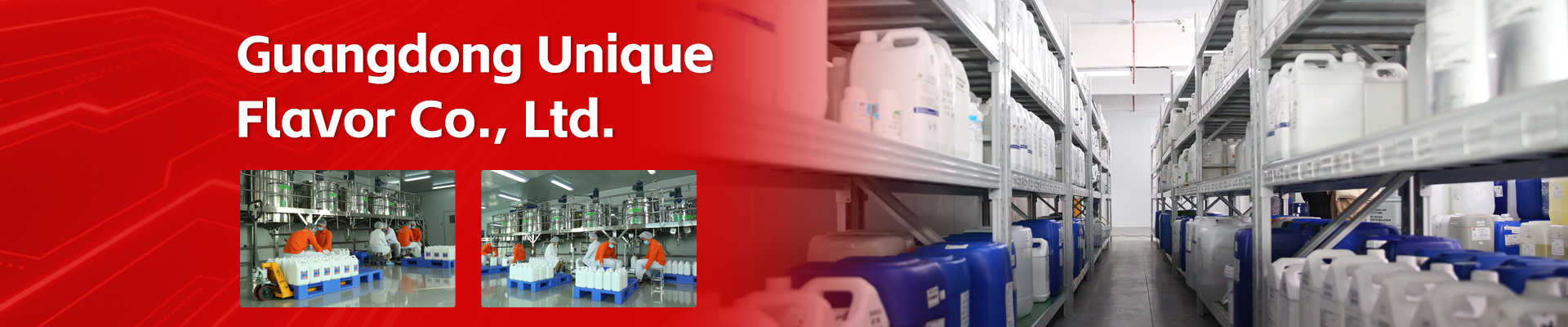
In the competitive world of food and beverage production, the reliability of your flavor supply is paramount. Yet, what defines reliable flavor goes far beyond the ingredient list; it lies deep within the manufacturing process itself. For a professional flavor manufacturer, the factory floor is not merely a mixing facility—it is a highly controlled, analytically validated environment where flavor chemistry is transformed into a stable, scalable, and compliant commercial product.
This comprehensive technical guide offers a transparent look inside our leading flavor factory, detailing the rigorous, multi-stage process that guarantees every drop of flavor concentrate meets the highest standards of safety, quality, and performance. We will explore the critical intersections of advanced analytical chemistry, sterile compounding practices, and supply chain integrity that ensure your brand receives consistent, world-class flavor, batch after batch.
1. Phase I: Raw Material Integrity and Supply Chain Control
The foundation of every high-quality flavor is the integrity of its raw materials. This phase focuses on verification, compliance, and risk mitigation before any material enters the compounding area.
1.1. Strategic Sourcing and Dual-Tier Auditing
Our sourcing strategy is built for resilience and purity. We maintain a diverse global network of suppliers for critical ingredients—natural extracts, essential oils, and flavor chemicals—to mitigate risks associated with geopolitical instability or climate-related crop failure (e.g., vanilla, cocoa, citrus).
Every raw material supplier undergoes a dual-tier auditing process:
Technical Audit:Verification of their production methods, safety protocols, and storage conditions.
Compliance Audit:Confirmation of adherence to international standards, including environmental and labor practices (ESG criteria).
1.2. The In-Bound Quality Control (QC) Gate
Upon arrival, no raw material proceeds without passing a series of mandatory technical checks in our QC laboratory. This process is crucial for preventing Economically Motivated Adulteration (EMA), a significant risk in high-value flavor components (Source 2.1).
Chemical Fingerprinting (GC-MS/HPLC):We use Gas Chromatography-Mass Spectrometry (GC-MS) and High-Performance Liquid Chromatography (HPLC) to verify the identity and purity of every incoming ingredient. This creates a molecular fingerprint, ensuring that the material matches the Certificate of Analysis (CoA) provided by the supplier. For example, we confirm the exact cis/trans ratio of key flavor aldehydes to guarantee expected sensory performance.
Isotope Ratio Analysis:For high-value natural ingredients (like natural vanilla or specific fruit extracts), we may employ Isotope Ratio Mass Spectrometry (IRMS) to verify the botanical and geographic origin, providing absolute assurance against fraudulent substitution (Source 2.2).
Microbiological Screening:Raw materials are screened for pathogens, yeast, and mold before being released to storage.
Only materials passing all gates are assigned an internal batch number and released to the quarantine storage area.
2. Phase II: Compounding and Manufacturing Integrity
This is where the art of the flavorist meets the science of industrial compounding. This phase is characterized by precision measurement, sterile environments, and rigorous process control.
2.1. GMP and ISO-Certified Environments
Our entire compounding process adheres to strict Good Manufacturing Practices (GMP) and is certified to ISO 9001:2015 standards (Source 3.1). This commitment ensures:
Controlled Access:Only trained and authorized personnel are allowed into the compounding areas, minimizing contamination risk.
Air Quality and Pressure:Compounding rooms utilize specialized HVAC systems to maintain positive air pressure and use HEPA filtration to prevent airborne particles from compromising the flavor concentrates.
2.2. Precision Gravimetric Dosing
Flavor formulation is executed using gravimetric dosing, measuring ingredients by weight rather than volume. This is essential because the density of flavor chemicals varies with temperature and composition.
Accuracy:We utilize highly calibrated industrial balances with precision down to milligrams, ensuring the exact execution of the Master Formula. This eliminates batch-to-batch variation and is the core mechanism for achieving flavor consistency.
The Master Formula:Every flavor is compounded according to a digitally controlled Master Formula (or Bill of Materials – BOM) that specifies the order of addition, mixing time, and temperature tolerances. Any deviation triggers an immediate halt and alert, maintaining a transparent and auditable record.
2.3. Mixing and Homogenization
The order and method of ingredient addition are technically critical, particularly when dealing with ingredients of varying solubility (e.g., suspending oil-soluble flavor compounds in an aqueous or glycol-based carrier).
Shear and Temperature Control:Specialized mixing equipment is used to ensure complete homogenization without introducing excessive heat or shear, which could degrade heat-sensitive top notes (like citrus aldehydes or certain esters). Homogenization ensures the flavor concentrate is physically stable and will not exhibit phase separation or opalescence upon standing or dilution.
Reaction Kinetics:For flavors involving natural reaction or maturation processes (e.g., Maillard reactions in savory flavors), compounding tanks may be equipped with temperature jackets to accelerate or maintain the precise thermal conditions necessary to develop the desired precursor compounds.
Flavor Compounding & Sterile Control
3. Phase III: Quality Assurance and Stability Validation
Manufacturing integrity is meaningless without conclusive proof of performance. This phase validates the final product’s quality, stability, and regulatory adherence.
3.1. Post-Compounding Analytical Checks
Once the flavor batch is completed and mixed, a sample is pulled and returned to the QC laboratory for final authentication. This ensures the compounding process itself did not introduce error or degradation.
Final GC-MS/HPLC Verification:A second molecular fingerprint is taken. The chromatogram must be nearly identical to the theoretical Master Standard profile. Any shift in the retention time or concentration of key impact volatiles requires investigation and potential re-work, ensuring batch-to-batch consistency is chemically guaranteed.
pH and Refractive Index Testing:These physical checks verify the solubility and concentration profile, which are crucial for the flavor’s performance in the final food or beverage matrix (e.g., ensuring a flavor will not destabilize a low-pH beverage).
3.2. Accelerated Stability and Shelf-Life Testing
We cannot wait 12 months to verify a flavor’s stability. We use established protocols, often adapted from ISO 11663 (Stability Testing) and general guidance on drug product testing (like those provided by the FDA), to simulate long-term shelf life in an accelerated timeframe.
Thermal Stress Testing:Flavor concentrates are stored in environmental chambers at elevated temperatures (e.g.,40∘C and 50∘C) for periods ranging from 30 to 90 days. Samples are periodically pulled and re-analyzed by GC-MS and sensory panels. A flavor must resist degradation under this stress (Source 3.2).
Light and Oxidation Exposure:Testing for photo-stability and resistance to oxidation is critical for products packaged in clear containers. We use UV chambers and measure peroxide values to ensure the flavor will not turn rancid or fade on the shelf.
3.3. Sensory Consistency Panel
The final critical validation is performed by our expert sensory panel. They are trained to identify and quantify subtle deviations in flavor profile that instruments might miss.
Triangle Testing:The panel conducts blind comparisons between the new batch, a historical reference batch, and the current Master Standard. This provides the final, human confirmation that the flavor is indistinguishable from the product the client has come to expect.
Flavor Drum & Certificate of Analysis
4. Phase IV: Traceability, Packaging, and Logistics
The final phase ensures the flavor concentrate is securely contained, correctly documented, and delivered with full end-to-end traceability.
4.1. Packaging Integrity and Inert Materials
Flavor concentrates, particularly highly volatile ones, must be packaged using materials that are inert and do not allow permeation (the passage of air or flavor components).
High-Density Polyethylene (HDPE) or Aluminum:These materials are chosen to prevent oxygen ingress, which accelerates oxidation and flavor degradation, and to prevent the volatile flavor molecules from “leaking” out.
Custom Filling:Automated filling lines are calibrated to ensure precise volumetric or gravimetric fill levels, with checks to prevent headspace (the air gap above the liquid), which is a major source of initial oxidation.
4.2. End-to-End Traceability and Regulatory Dossiers
Every container is labeled with a unique batch number, creating a digital audit trail that links back to the original raw material CoAs, the internal QC reports, the GC-MS results, and the sensory panel sign-offs.
Dossier Generation:This traceability enables the rapid generation of the Regulatory Dossier required by our clients (Source 4.1). This includes full ingredient disclosure (CAS numbers), allergen statements, Kosher/Halal certifications, and the final CoA, drastically simplifying our clients’ compliance and auditing processes.
Just-in-Time (JIT) Delivery:Our validated processes and inventory controls support JIT delivery schedules, minimizing the time the flavor concentrate spends waiting in a client’s warehouse, thereby maximizing its effective shelf life and freshness upon use.
Conclusion: Your Guarantee of Flavor Consistency
The flavor factory is a high-stakes ecosystem governed by chemistry, regulation, and precision. Our commitment to an ISO-certified environment, validated analytical methods (GC-MS/HPLC), rigorous stability testing, and complete supply chain transparency is the reason we consistently deliver flavor excellence.
Choosing a flavor partner is choosing a quality and compliance standard. Our manufacturing process is your guarantee that the flavor you approved in a small sample will be chemically, physically, and sensorially identical in every production batch, ensuring the continued trust and loyalty of your consumers.
R&D Partnership Handshake
📞 Call to Action:
Are you confident in the chemical integrity and consistency of your flavor supply?
We invite your Procurement and R&D teams to schedule a Technical Exchange to review our quality assurance protocols and discuss how our manufacturing rigor can future-proof your product line. Request a free, technically validated sample batch today.