
Author: R&D Team, CUIGUAI Flavoring
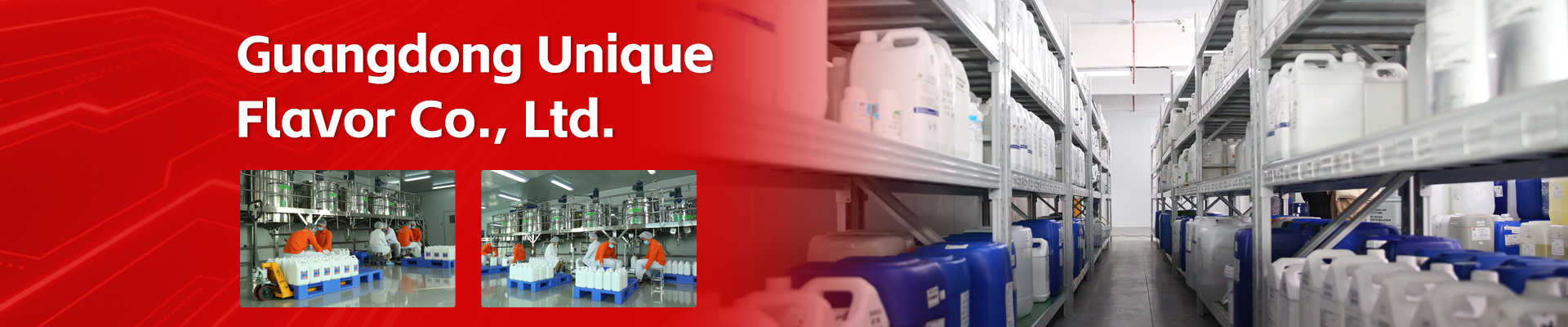
Published by: Guangdong Unique Flavor Co., Ltd.
Last Updated: Mar 25, 2026

Molecular Sweetness Interaction
The global food and beverage landscape is undergoing a profound transformation. Driven by heightening consumer awareness regarding health, increasing rates of metabolic diseases, and implementing sugar taxes in numerous jurisdictions, the industry is racing toward sugar reduction. However, the path to sugar reduction is fraught with formulation challenges. Consumers demand health without compromising on taste—a mandate that has historically been difficult to achieve with traditional sugar substitutes.
We have entered the era of Next-Generation Sweeteners. Unlike their artificial predecessors, these solutions (such as specific Stevia glycosides, Allulose, and Monk Fruit) offer “clean label” potential and better base taste. Yet, even these advanced ingredients rarely provide a perfect 1:1 replacement for sucrose. They often bring undesirable off-notes, lingering sweetness, or a lack of crucial mouthfeel.
The solution does not lie in the sweetener alone, but in the sophisticated integration of flavor and modulation technology. As professional manufacturers of food and beverage flavorings, we understand that achieving the “optimal taste profile” requires a holistic, matrix-specific approach. This article explores the technical intricacies of next-generation sweeteners and the flavor integration strategies that unlock their potential.
To replace sugar, one must understand what makes sugar so desirable from a sensory perspective. Sucrose (table sugar) is the gold standard not just because it is sweet, but because of its entire sensory delivery.
Sucrose has a specific temporal curve. It has a rapid onset of sweetness, reaches a high peak quickly, and dissolves cleanly, leaving almost no aftertaste or lingering sweetness. This “quick in, quick out” mechanism is highly satisfying to the palate.
Beyond sweetness, sucrose contributes significantly to the texture or “mouthfeel” of a matrix. It provides viscosity and solids (the “bulk”). When sugar is removed, a beverage often feels “thin” or “watery,” and solid foods lose structural integrity.
At sub-threshold levels, sucrose enhances many desirable flavor notes, such as fruit acidity or cocoa richness, while simultaneously suppressing undesirable notes like bitterness.
Next-generation sweeteners must strive to replicate this multidimensional profile.
“Next-generation” refers to sweeteners that are naturally sourced, often low- or zero-calorie, and possess a superior taste profile compared to older artificial options like saccharin or aspartame. Let’s examine the leading contenders.
Stevia has been a market staple for years, but first-generation glycosides (primarily Rebaudioside A, or Reb A) have been plagued by bitterness and a strong, lingering anise-like aftertaste.
The industry has moved toward rare glycosides such as Rebaudioside M (Reb M) and Rebaudioside D (Reb D). These are found in minuscule quantities within the Stevia leaf but can now be produced sustainably via precision fermentation or bioconversion.
Monk Fruit, derived from a melon native to Southeast Asia, contains potent sweetness in compounds called mogrosides (typically Mogroside V is the marker).
Allulose is a “rare sugar” found naturally in small quantities in figs, raisins, and maple syrup. It has recently gained massive traction in markets like the U.S. (subject to varying global regulatory approvals).
Another rare sugar, Tagatose is 90% as sweet as sugar with minimal impact on blood glucose.

Sweetness Temporal Curve
The defining challenge of using next-generation high-intensity sweeteners (like Reb M or Monk Fruit) is the mismatch of the sensory curve. They fail to achieve the specific temporal dynamic of sucrose.
There is often a “sweetness lag.” When a consumer takes a sip, the sweetness takes a fraction of a second too long to register, disrupting the expected experience.
Perhaps the biggest hurdle is the finish. Sweetness from Stevia or Monk Fruit continues to “cling” to the tongue long after the product is swallowed. This phenomenon, often termed “sweetness linger,” is a major rejection driver for consumers.
While Reb M is superior, many lower-cost Stevia and Monk Fruit extracts still bind to bitterness receptors (TAS2R receptors) alongside the sweetness receptors (T1R2/T1R3), resulting in a bitter or metallic tail-note.
Simply “plugging in” a sweetener without flavor technological intervention almost always results in a product that tastes artificial or unbalanced. This is where the integration of flavor and modulation technology becomes the critical, non-negotiable step.
At our manufacturing facility, we do not view sugar reduction as merely a sweetener substitution exercise. We view it as an exercise in complex flavor matrix orchestration. The integration of specific flavor technologies—often grouped under FMP (Flavors with Modifying Properties)—is essential to bridge the gap between sugar and alternative sweeteners.
Here is the technical approach to utilizing flavor integration to solve the sugar-reduction puzzle.
To address the “late onset” and “lingering” problems, we utilize proprietary flavor systems that modify the perception of sweetness over time.
Masking technology has evolved beyond simply overpowering off-notes with potent top-notes (like strong vanilla or berry flavors). True masking requires sophisticated molecular interactions.
Our masking compounds work at the receptor level. Certain “bitterness blockers” are molecules that temporally bind to bitterness receptors on the tongue, preventing the off-notes from the sweetener (or protein, in some functional beverages) from attaching. This allows the desirable sweetness and top-notes of the food or beverage to shine through.
Citation 1 (Scientific Journal reference placement): The effectiveness of modern flavor masking is heavily researched, focusing on how specific compounds can allosterically modulate taste receptors, which is critical for reducing the bitterness associated with high-intensity sweeteners. (Reference: Journal of Agricultural and Food Chemistry, or similar).
The loss of viscosity and texture when removing sugar is a significant sensory deficit. Flavoring technology provides tools to address this, even in zero-sugar applications.
While texturizers like hydrocolloids are often used, flavor technologists can add specific “body” or “fat-mimetic” flavor notes. These create an aromatic perception of richness, mouth-coating, or texture that is often lost when sugar is removed, particularly in dairy, dairy-alternative, or beverage matrices.
Rarely does a single next-generation sweetener solve the problem. Optimization often requires blending different sweeteners to leverage their distinct, synergistic properties.
This is a potent combination. Allulose provides the bulk, texture, rapid sweetness onset, and a clean initial profile. Reb M is then layered in at very low levels to achieve the desired sweetness intensity without introducing bulk. The result is a profile that is indistinguishable from sucrose in many matrices, such as carbonated soft drinks or sauces.
Stevia (Reb M/D) and Monk Fruit often have complementary sensory attributes. Stevia tends to provide a slightly more acidic or “top-note” sweetness, while Monk Fruit provides a “rounder” and sometimes more “fruity/herbal” sweetness. Blending them allows formulators to fill in “gaps” in the sweetness curve, creating a more complete and robust sweetness sensation than either can achieve alone.
Our flavoring systems are often specifically designed to enhance these synergistic effects, smoothing the transitions between the different sweeteners.
It is important for manufacturers to understand the regulatory context of “Flavors with Modifying Properties” (FMP). In many global regulatory frameworks, including FEMA (Flavor and Extract Manufacturers Association) in the U.S. and relevant bodies in the EU, flavorings that have a principal use for flavor, but which also modify taste characteristics (like sweetness) below the detection threshold, can be labeled simply as “Natural Flavor.”
This provides significant labeling advantages for “clean label” products, allowing for a declaration of “Stevia leaf extract (sweetener)” and “Natural Flavor (the modulator).”
Citation 2 (Regulation/Industry Association placement): We strictly adhere to guidelines set forth by the Codex Alimentarius Commission and recognized industry bodies (like FEMA) ensuring that all of our flavoring modulators used for taste enhancement meet the necessary safety and labeling requirements for food and beverage applications. (Reference: Codex Alimentarius or FEMA official website).

Sensory Evaluation Lab
Flavor integration is rarely a “one-size-fits-all” solution. The performance of sweeteners and flavor modulators is heavily dependent on the food or beverage matrix in which they are placed.
Sugar is fundamental to the structure and browning of baked goods. Removing it affects Maillard browning, texture, and rise.
Confectionery (gummies, chocolates) relies on sugar for bulking, crystallization control, and often the “snap” in chocolate.
Citation 3 (Professional Journal placement): Research in leading food technology journals consistently confirms that the perception of sweetness from non-nutritive sweeteners is highly matrix-dependent. A compound that performs well in a clear water solution may fail dramatically when incorporated into a complex matrix like oat milk or baked goods. (Reference: Journal of Food Science).
The future of next-generation sweeteners and flavor integration is increasing precision. We no longer rely solely on subjective evaluation.
We use trained, professional sensory panels to “map” the flavor and sweetness profiles of products. A product is evaluated against dozens of specific attributes (sweet onset, linger, bitterness, mouthfeel, fruitiness, acidity, metallic) and plotted against a benchmark. This data-driven approach allows us to quantify the “gap” between a sugar-reduced prototype and the target, guiding the precise dosage of modulators and flavorings needed to achieve alignment.
We are increasingly utilizing computational tools and sensory databases to predict the interactions between complex sweetener blends and flavor compounds. By analyzing vast datasets, we can rapidly identify the most promising flavor combinations to modulate specific next-generation sweetener systems, accelerating the development timeline for our clients.
Achieving an optimal taste profile in a sugar-reduced product is an advanced technological hurdle. It requires more than just an ingredient supplier; it requires a deep technological partner.
When you work with a professional flavoring manufacturer, you gain access to:
The market for sugar-reduced products is vast and still growing. However, the window of tolerance for products that “taste reduced” has closed. Consumers will only adopt health-focused products that provide a superior sensory experience.
Citation 4 (Official Corporate/Industry Website placement): Major food industry reports confirm that “taste” remains the primary driver of purchase decisions, even in the context of increasing health trends. Manufacturers that prioritize taste optimization through advanced flavor and sweetener technology are better positioned to capture market share. (Reference: Innova Market Insights, Mintel, or similar market research organization).
The era of choosing between health and taste is over. Next-generation sweeteners offer a powerful foundation for sugar reduction, but they are not a standalone solution. The path to sugar reduction excellence requires the expert integration of advanced flavoring and modulation technology.
By understanding the sensory architecture of sugar and precisely modulating the temporal curves, masking off-notes, and restoring mouthfeel of alternative sweeteners, formulators can create products that not only meet nutritional guidelines but delight the consumer palate.
As professional manufacturers of food and beverage flavorings, we possess the technology, expertise, and sensory tools to help you bridge the flavor gap.
Do not allow sugar reduction to compromise your brand’s taste heritage. Contact us to engage in a technical exchange. Our technical experts are ready to collaborate with your R&D team to analyze your specific product matrix and develop a customized flavor integration strategy. We also offer free samples of our next-generation sweetener modulators and targeted flavor systems, allowing you to experience firsthand how our technology can transform your sugar-reduction portfolio.
Request your sample today and unlock the optimal taste potential of your next-generation products.

Innovated Consumer Products
Unlock Optimal Taste with Technical Exchange & Free Samples
Is your sugar-reduction project hitting a flavor wall? Achieving a truly “sugar-like” experience requires a complex interplay of sensory science and advanced flavoring technology. Our technical team is ready to provide a deep-dive consultation on your specific product matrix and challenges.
We invite you to engage in a technical exchange. Fill out the form below or contact our sales office to discuss your needs. Furthermore, we are pleased to offer free samples of our proprietary next-generation sweetener modulators and optimized flavor systems. Experience the difference that flavor integration can make.
| Contact Channel | Details |
| 🌐 Website: | www.cuiguai.cn |
| 📧 Email: | info@cuiguai.com |
| ☎ Phone: | +86 0769 8838 0789 |
| 📱 WhatsApp: | +86 189 2926 7983 |
| 📍 Factory Address | Room 701, Building 3, No. 16, Binzhong South Road, Daojiao Town, Dongguan City, Guangdong Province, China |
Copyright © 2025 Guangdong Unique Flavor Co., Ltd. All Rights Reserved.


