
Author: R&D Team, CUIGUAI Flavoring
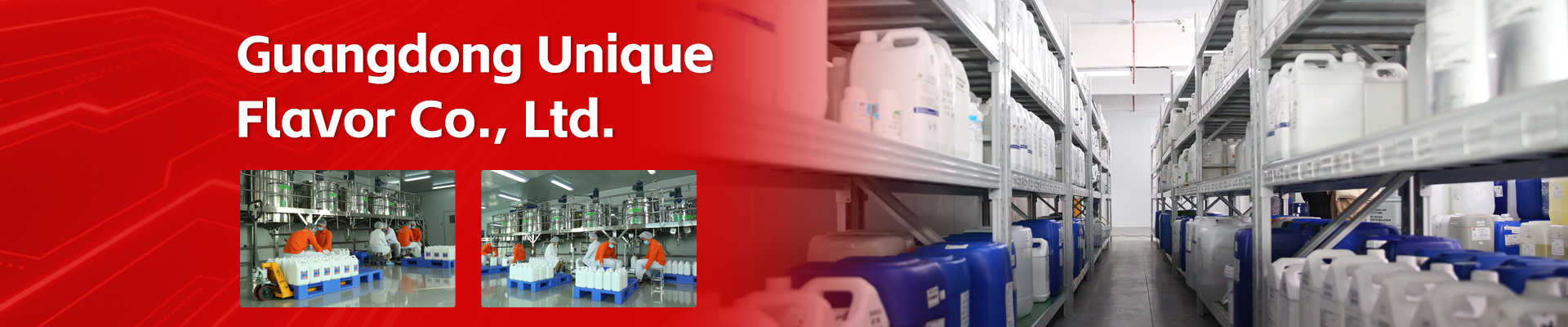
Published by: Guangdong Unique Flavor Co., Ltd.
Last Updated: May 07, 2026
WhatsApp & Telegram: +86 189 2926 7983

Modern Flavor Lab Operations
In the highly competitive and fast-paced food and beverage (F&B) industry, consistency is the bedrock of brand loyalty. Consumers expect their favorite beverage, confectionery, or dairy product to taste exactly the same today as it did a year ago. Achieving this sensory consistency relies entirely on an uninterrupted, high-quality supply of food and beverage flavorings. However, the global supply chain has never been more volatile. From extreme weather events decimating crop yields to geopolitical shifts reshaping international trade routes, the procurement of raw materials for flavors is fraught with unprecedented risks.
For specialized F&B manufacturers—and particularly for our partners operating within the Russian Federation and the broader Eurasian Economic Union (EAEU)—navigating this complexity requires a proactive, highly strategic approach. The shift toward import substitution, changing logistical corridors, and strict regional regulatory standards demand that food technologists and procurement managers rethink their sourcing paradigms.
This comprehensive technical guide explores the root causes of supply chain disruptions in the flavor industry, examines the unique challenges and opportunities within the Russian market, and outlines robust risk mitigation strategies. By the end of this post, you will understand how partnering with an agile, globally integrated flavor manufacturer can safeguard your production lines and protect your brand’s most valuable asset: its signature taste.
To understand how to mitigate risk, one must first deconstruct the supply chain of industrial flavors. The creation of a single complex flavor profile—such as a rich vanilla for ice cream or a vibrant citrus blend for an energy drink—is rarely the result of a single ingredient. It is a precise symphony of dozens, sometimes hundreds, of distinct aromatic compounds.
Flavorings are generally categorized into three main types: natural extracts, nature-identical aroma chemicals, and artificial (synthetic) flavorings.
A disruption at any single node—a bad harvest of Madagascar vanilla, an industrial accident at a European chemical plant producing key aldehydes, or a maritime logistics bottleneck—can paralyze the production of the final flavor compound.
According to reports by the Food and Agriculture Organization (FAO), the increasing frequency of extreme weather anomalies has introduced structural vulnerabilities into global agricultural supply chains, highlighting the pressing need for sourcing diversification in botanically derived commodities. When the raw materials are disrupted, the cascading effect hits the flavor house, and ultimately, the F&B manufacturer.
To build a resilient procurement strategy, organizations must conduct thorough risk assessments across several critical threat vectors. The modern F&B landscape faces three primary categories of disruption.
The most acute risk to natural flavor sourcing is climate change. Many high-value flavor components are geographically highly concentrated.
For the Russian F&B sector, geopolitics is arguably the most immediate and profound disruptor. Sanctions, trade embargoes, and shifting international alliances can sever established supply lines overnight. Historically, many Russian food manufacturers relied heavily on Western European flavor houses. Recent geopolitical realignments have forced a rapid pivot toward import substitution (importozameshcheniye) and the establishment of new trade corridors with Asian partners. Finding suppliers who are insulated from arbitrary trade restrictions and who maintain stable, cross-border financial and logistical channels is a modern imperative.
Even when raw materials are abundant and trade lines are open, the physical movement of goods remains perilous. We have witnessed unprecedented fluctuations in container freight rates, shortages of ISO tanks, and congestion at major global ports. For liquid flavors, prolonged transit times are not just an economic issue; they are a quality control issue. Prolonged exposure to improper temperatures during shipping can degrade volatile top notes or cause emulsion breakdown.

Global Flavor Logistics Map
Supplying the Russian Federation requires specialized knowledge. A standardized global approach to flavor supply chain management often falls short when applied to the unique geographic, regulatory, and cultural realities of Russia and the CIS (Commonwealth of Independent States) region.
Russia’s geography dictates that freight may spend weeks in transit, often enduring extreme temperature variations. During winter, freight moving via the Trans-Siberian Railway from Far East ports like Vladivostok to manufacturing hubs in Moscow, St. Petersburg, or Yekaterinburg can face ambient temperatures plunging below -30°C (-22°F).
Many liquid flavors utilize solvents that can freeze or crystallize under these conditions. For instance, while pure propylene glycol has a low freezing point, complex flavor emulsions or those utilizing water or specific essential oils can separate, turn cloudy, or undergo irreversible organoleptic degradation when frozen and thawed. Mitigating this risk requires highly specialized logistics:
Regulatory compliance is a non-negotiable aspect of supply chain resilience. An undocumented ingredient can lead to customs seizures, causing severe production delays. Flavors imported into Russia must strictly comply with the regulations set forth by the Eurasian Economic Commission (EEC), specifically TR CU 029/2012 (“Safety requirements for food additives, flavorings and technological aids”) and TR CU 021/2011 (“On safety of food products”).
A resilient flavor partner must provide impeccable documentation, including:
Supply chain risk mitigation also involves ensuring that the flavors being sourced actually resonate with the end consumer, reducing the risk of commercial failure. The Russian palate has distinct preferences. There is strong demand for rich, indulgent profiles in dairy and confectionery (e.g., sgushchenka or boiled condensed milk, rich caramel, dark chocolate) and specific fruit profiles (e.g., blackcurrant, forest berries, sea buckthorn). In beverages, alongside standard colas and citrus drinks, there is a sustained need for authentic flavorings for kvass, fermented milk products like kefir and ryazhenka, and robust tea profiles. Working with a supplier who understands these localized profiles accelerates product development and ensures market acceptance.
Understanding the risks is only the first step. The core of a resilient procurement operation lies in the active strategies deployed to mitigate them. According to supply chain resilience frameworks published by McKinsey & Company, modern manufacturers must transition from a “Just-In-Time” (JIT) philosophy—which optimizes for low inventory costs—to a “Just-In-Case” (JIC) or a hybrid agile model that prioritizes business continuity.
Relying on a single supplier for a critical “hero” flavor is a critical vulnerability. F&B manufacturers must implement dual-sourcing strategies. However, this is more complex in the flavor industry than in commodity purchasing. Because flavor formulas are proprietary, switching suppliers often means slight variations in taste.
To mitigate this, companies should proactively work with a secondary supplier to develop “flavor matches” before a crisis hits. By submitting a current flavor profile to our expert flavorists, we can utilize advanced gas chromatography-mass spectrometry (GC-MS) to analyze the molecular composition and reverse-engineer a perfect match. This ensures that you have a fully approved, drop-in replacement ready to deploy at a moment’s notice.
Explore our comprehensive flavor portfolio to discover how we can serve as a robust primary or secondary pillar in your supply chain architecture.
Supply chain shocks often happen with zero warning. Establishing strategic safety stocks is essential. F&B manufacturers must work closely with their flavor suppliers to establish Vendor-Managed Inventory (VMI) agreements or localized warehousing solutions.
For the Russian market, this means positioning buffer stock within the customs territory of the EAEU. By holding safety stock in local distribution centers, the lead time drops from weeks (accounting for international freight and customs clearance) to mere days, effectively shielding the production line from cross-border disruptions.
When a specific natural ingredient becomes globally unavailable or prohibitively expensive (e.g., natural vanilla extract during a supply crisis), manufacturers must be ready to pivot. Agile formulation relies on the ability to substitute ingredients without compromising the final product’s sensory profile.
This is where the distinction between natural and nature-identical flavors becomes a powerful tool. If an F&B brand is not strictly constrained by a “100% natural” label claim, transitioning to a nature-identical flavor formulation can instantly eliminate agricultural supply chain risks and significantly reduce costs. Nature-identical flavors are synthesized to be chemically indistinguishable from their natural counterparts, offering identical taste and aroma but with highly stable, infinitely scalable supply chains.
Our technical teams specialize in helping brands navigate these transitions smoothly. For deeper insights into industry shifts and formulation strategies, we regularly update our flavor industry insights blog, providing our partners with the knowledge needed to stay ahead of market trends.

Resilient Supply Chain Model
Mitigating supply chain risk in 2026 and beyond requires integrating advanced technology into procurement operations. The era of managing raw material sourcing via disconnected spreadsheets is over.
Modern flavor manufacturing utilizes artificial intelligence and machine learning algorithms to predict raw material shortages before they occur. By analyzing vast datasets—including global weather patterns, agricultural commodity pricing, shipping lane congestion, and geopolitical news feeds—predictive analytics can flag a potential shortage of a key ingredient like lemon oil months in advance. This foresight allows us to secure raw materials ahead of market price spikes, ensuring price stability for our clients.
Quality and authenticity are paramount, particularly when sourcing high-value natural extracts subject to economically motivated adulteration (food fraud). When supply is tight, the risk of adulteration increases. Implementing blockchain technology or advanced digital ledger systems allows for immutable, end-to-end traceability of raw materials.
For our Russian clients, knowing the exact provenance of a flavor component—from the specific agricultural cooperative in Asia or South America through to the final processing facility—simplifies EAEU customs clearance and reinforces consumer trust in the final product.
During periods of supply chain stress, there is often a temptation for some suppliers to cut corners—substituting lower-grade solvents, rushing extraction processes, or bypassing rigorous testing to expedite shipments. This is where a manufacturer’s commitment to Quality Assurance (QA) is truly tested.
Risk mitigation must never come at the expense of quality. Even when shifting supply lines or reformulating a nature-identical match, the core parameters must remain rigidly controlled:
A robust QA framework guarantees that when a contingency plan is activated, the F&B manufacturer experiences zero friction on the production line, and the end consumer notices absolutely no difference in their favorite product.
Ultimately, your supply chain is only as strong as its weakest link, and your ability to mitigate risk is heavily dependent on the capabilities of your suppliers. Navigating the complexities of the global market, particularly the specific demands of the Russian F&B sector, requires more than just a vendor; it requires a strategic partner.
When selecting a flavor partner, Russian F&B manufacturers should evaluate:
By partnering with a manufacturer that possesses deep vertical integration, a diversified raw material procurement network, and an unwavering commitment to EAEU regulatory standards, F&B brands can effectively insulate themselves from global volatility. We pride ourselves on offering exactly this level of resilient, comprehensive support. Explore our custom food and beverage flavor solutions to see how we can safeguard your specific product lines.
Supply chain disruptions in the flavor industry are no longer black swan events; they are systemic realities driven by climate change, geopolitical realignments, and logistical constraints. For F&B manufacturers operating in the Russian market, the challenges are compounded by severe cold-weather logistics and strict EAEU regulatory frameworks.
However, risk can be effectively managed and transformed into a competitive advantage. By moving away from fragile, single-source dependencies and embracing strategies like dual-sourcing, agile flavor reformulation, and dynamic localized inventory buffering, companies can guarantee production continuity.
The key lies in foresight, technical adaptability, and most importantly, choosing the right manufacturing partner. A resilient flavor house does not just supply ingredients; it supplies stability, regulatory peace of mind, and the assurance that no matter what disruptions occur globally, your brand’s signature taste will remain flawless and uncompromised.

End-to-End Flavor Realization
Do not wait for the next global disruption to test the limits of your supply chain. Ensure your production lines remain uninterrupted and your flavor profiles remain perfectly consistent.
Our team of expert flavorists and logistics specialists are ready to help you audit your current flavor procurement strategy, provide drop-in exact-match alternatives to secure your secondary supply lines, and navigate the complexities of EAEU compliance.
Contact us today for a comprehensive technical consultation or to request a free sample tailored specifically to your application needs. Let us prove how our agile, globally integrated manufacturing capabilities can provide the ultimate risk mitigation for your F&B brand.
| Contact Channel | Details |
| 🌐 Website: | www.cuiguai.cn |
| 📧 Email: | info@cuiguai.com |
| ☎ Phone: | +86 0769 8838 0789 |
| 📱 WhatsApp: | +86 189 2926 7983 |
| 📱 Telegram: | +86 189 2926 7983 |
| 📍 Factory Address | Room 701, Building 3, No. 16, Binzhong South Road, Daojiao Town, Dongguan City, Guangdong Province, China |
Copyright © 2025 Guangdong Unique Flavor Co., Ltd. All Rights Reserved. Return and Exchange Policy


