
Auteur : Équipe R&D, Arômes CUIGUAI
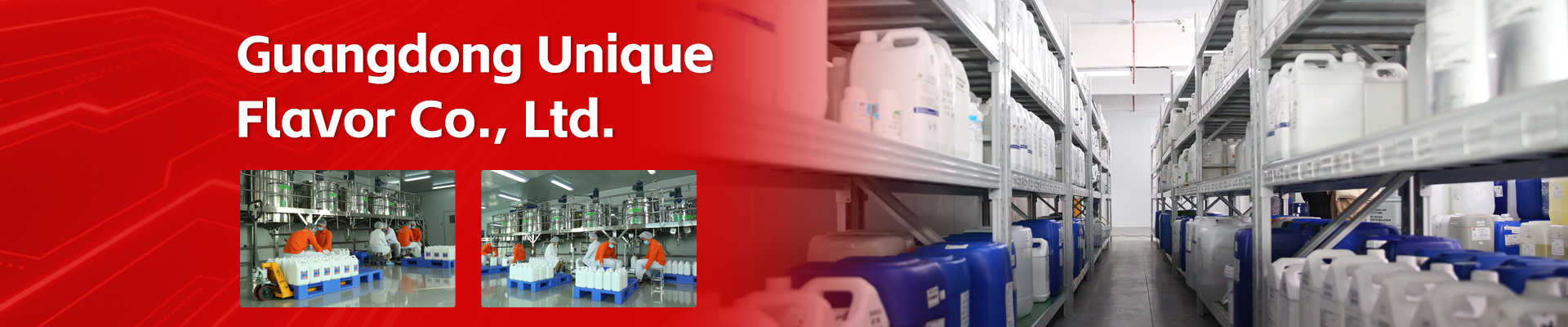
Publié par : Guangdong Unique Flavor Co., Ltd.
Dernière mise à jour : Avr 30 , 2026

Processus d’embouteillage
Dans l'industrie mondiale des boissons, la « saveur héroïque » est l'âme du produit. Qu'il s'agisse d'une soda aux agrumes rafraîchissante, d'une eau fonctionnelle botanique complexe ou d'une boisson fermentée traditionnelle comme le kvass, c'est le profil de saveur initial qui conquiert le cœur du consommateur. Toutefois, le véritable défi pour les responsables R&D et les technologues en boissons n'est pas seulement de créer ce profil — c'est d'en assurer la pérennité. integrity sur toute la durée de conservation de 12 mois.
La stabilité des saveurs constitue le talon d'Achille de l'innovation en boissons. Du moment de la fabrication à celui de la consommation, les molécules aromatiques subissent une attaque constante par l'oxydation, l'hydrolyse, la dégradation induite par la lumière et les fluctuations de température. Pour les fabricants visant des marchés concurrentiels — y compris ceux en pleine évolution rapide en Russie et dans la CEI — la maîtrise de la science de la stabilité fait toute la différence entre un leader du marché et un produit échoué.
Ce guide fournit une analyse technique exhaustive des facteurs chimiques et physiques influant sur la stabilité aromatique des boissons, tout en proposant des stratégies avancées pour préserver votre investissement sensoriel.
Pour résoudre le problème de stabilité, il faut d'abord comprendre l'ennemi. Les substances aromatiques sont des composés chimiques volatils, souvent contenant des groupes fonctionnels intrinsèquement réactifs.
L'oxydation constitue la cause la plus courante du développement de saveurs désagréables, en particulier dans les boissons à base d'agrumes riches en terpènes. Des terpènes tels que limonene et citral sont sujettes à l’autoxydation.
Lorsque le citral, présent dans les huiles de citron et de lime, est exposé à l'oxygène, il subit une série de réactions. Selon les données chimiques standards de l'industrie souvent citées par la U.S. Food and Drug Administration (FDA) en matière de sécurité des arômes, le citral peut se dégrader en p-cymène et p-méthylacétophénone. Ces produits de dégradation n’ont pas le goût de citron ; ils évoquent plutôt la térébenthine ou un vieux savon.
Le processus d'oxydation suit un mécanisme de radicaux libres :
La plupart des boissons gazeuses et des boissons aux saveurs de fruits ont un pH faible (entre 2,5 et 3,5). Dans ces environnements aqueux acides, les esters — molécules responsables des notes fruitées telles que la fraise, la pomme et l'ananas — subissent hydrolysis.

Dans cette réaction, l'ester se décompose à nouveau en son acide parent et en alcool. Étant donné que l'ester possède un seuil sensoriel beaucoup plus bas (il est plus puissant) que l'acide ou l'alcool, la boisson « perd » effectivement sa fruité au fil du temps, devenant plate et trop acide.
Dans les boissons contenant des protéines ou des acides aminés (comme les laits végétaux ou les eaux protéinées) et des sucres réducteurs, le Maillard reaction peuvent survenir même à température ambiante. Bien que cette réaction soit souhaitable dans le café ou le pain grillé, dans une boisson protéinée à la saveur de « Pêche Fraîche », elle engendre des pigments bruns et des notes de « cuit » ou de « céréale » qui masquent la finesse du profil fruité.
Un arôme n’existe pas dans le vide. Il interagit avec chaque autre composant de la “matrice” de la boisson.
La tendance mondiale à la réduction du sucre a profondément affecté la stabilité des saveurs. Le saccharose (sucre de table) agit comme un flavor fixative. Cela augmente la viscosité du liquide et réduit la pression de vapeur des composés aromatiques volatils, les “piégeant” essentiellement dans la boisson.
Lorsque les fabricants optent pour des édulcorants à haute intensité (HIS) tels que la Stevia, l’Erythritol ou la Sucralose, cet effet fixatif disparaît. Sans la « chair » du sucre, les saveurs de tête s’échappent plus aisément, et la durée de conservation semble raccourcie. De plus, certains HIS peuvent interagir chimiquement avec les arômes, laissant un arrière-goût amer persistant. L’utilisation d’ingrédients de haute performance liquid beverage flavorings concevoir spécifiquement pour les bases à faible teneur en sucre est essentiel pour rétablir cet équilibre perdu.
L'eau constitue l'ingrédient fondamental de toute boisson, et la présence d'ions métalliques de transition, notamment le fer (Fe), influence profondément sa qualité.2+Et le Cuivre (Cu)2+), agit comme un catalyseur puissant pour l'oxydation. Même à des concentrations inférieures à 1 ppm, ces métaux peuvent accélérer la dégradation des huiles d'agrumes par un facteur de dix.
Les fabricants doivent utiliser de l'eau déionisée ou en osmose inverse et peuvent envisager des agents chélatants comme l'EDTA ou des alternatives naturelles telles que l'acide citrique pour séquestrer ces ions métalliques. Si vous rencontrez des problèmes de qualité de l'eau dans votre unité de production locale, envisagez flavoring application guides peuvent offrir des perspectives précieuses pour adapter votre formule.

Microencapsulation moléculaire
Pour protéger les composants aromatiques les plus sensibles, les maisons de saveurs telles que CUIGUAI Flavors utiliser des systèmes de délivrance physiques avancés.
La microencapsulation consiste à enrober les gouttelettes de saveur dans une matrice protectrice, telle que la gomme arabique, l'amidon modifié ou la maltodextrine.
Dans les boissons prêt-à-boire (RTD), les huiles essentielles doivent être dispersées dans l'eau. Étant moins denses que l'eau, elles ont tendance à flotter à la surface — phénomène connu sous le nom de « crème » ou « anneau ».
Pour prévenir cela et renforcer la stabilité, nous utilisons weighting agents comme le SAIB (Sucrose Acetate Isobutyrate) ou la gomme ester pour augmenter la densité de l’huile jusqu’à ce qu’elle corresponde à celle de la phase aqueuse (1,00 g/cm3. De plus, réduire la taille des gouttelettes à l’échelle “nano” (100-200 nm) par homogénéisation à haute pression garantit la stabilité de l’émulsion selon Stokes’ Law:

Le processus de fabrication est souvent le moment le plus brutal dans la vie d'une saveur.
Avant le remplissage, de nombreux fabricants de premier plan utilisent la déaération pour éliminer l’oxygène dissous dans la boisson. Réduire le DO en dessous de 0,5 mg/L constitue l’une des méthodes les plus efficaces pour prolonger la durée de vie d’une boisson aromatisée aux agrumes ou aux baies. Ceci est particulièrement crucial pour les boissons utilisant natural fruit extracts qui ne contiennent pas les stabilisants synthétiques présents dans les alternatives artificielles.
Même une boisson parfaitement formulée échouera si l’emballage est inadéquat.
La lumière UV fournit l'énergie d'activation nécessaire à la dégradation des saveurs. La riboflavine (vitamine B2), souvent présente dans les jus ou ajoutée aux boissons énergisantes, agit comme un photosensitizer. Lorsqu’il est exposé à la lumière, il atteint un état excité et transfère de l’énergie à l’oxygène, créant singlet oxygen—une espèce hautement réactive qui détruit instantanément les saveurs.
Les bouteilles en PET sont légèrement perméables à l'oxygène et au CO2. Avec le temps, l’oxygène s’infiltre et le CO2 (qui confère la « mordant » et l’acidité équilibrant la saveur) s’échappe. Pour les produits avec une longue chaîne logistique, tels que ceux distribués à travers la vaste région de la CEI, les bouteilles en PET à barrière élevée ou les canettes en aluminium sont privilégiées.

Logistique et routes
Les marchés russe et de la CEI (incluant le Kazakhstan, la Biélorussie et l'Ouzbékistan) offrent un paysage unique pour les fabricants de boissons. Comprendre le comportement d'achat B2B et les exigences techniques régionales est essentiel pour réussir.
En Russie, on accorde une profonde appréciation aux profils traditionnels et « terreux ». Kvass (seigle fermenté), Mors (punch aux baies), et Tarkhun (estragon) demeure un incontournable. Cependant, le mouvement « Zozh » (Zdorovyy Obraz Zhizni – Mode de vie sain) a engendré une transformation profonde vers :
Tous les arômes utilisés en Russie et dans l’Union économique eurasiatique doivent respecter les Technical Regulations of the Customs Union. Ces réglementations sont strictes concernant le dosage de certaines substances (comme la coumarine ou le thujone). Lors de l’approvisionnement imported flavoring ingredients, les fabricants doivent veiller à ce que la “Fiche Technique” (TDS) et la “Fiche de Sécurité” (SDS) soient conformes aux normes GOST.
La distribution de boissons de Saint-Pétersbourg à Vladivostok implique de traverser plusieurs zones climatiques. Un produit peut être stocké dans un entrepôt à +30°C en été ou rester dans un camion à -40°C en hiver.
Les fabricants russes privilégient technical authority et local reliability. Ils privilégient les fournisseurs capables de fournir non seulement un arôme, mais une solution clé en main comprenant des recommandations de dosage et des données de stabilité. Offrir un support local et des échantillons est la voie la plus rapide pour instaurer la confiance dans cet environnement B2B. Pour en savoir plus sur ces tendances régionales, consultez notre article sur innovative flavor technology in the Eurasian market.
Pour garantir une durée de conservation de 12 mois, il ne suffit pas d'attendre 12 mois. Les laboratoires R&D utilisent Accelerated Shelf-Life Testing (ASLT).
La vitesse des réactions chimiques double généralement pour chaque augmentation de 10℃ de la température. Cela est connu sous le nom de Q10 valeur.
En conservant les échantillons à 35°C ou 45°C, nous pouvons simuler plusieurs mois de vieillissement en seulement quelques semaines.
La chromatographie en phase gazeuse couplée à la spectrométrie de masse (GC-MS) nous permet de quantifier la perte de composés « marqueurs » spécifiques. Par exemple, si une saveur de fraise perd 40 % de ses ethyl butyrate lors de l’ASLT, nous savons que la « fraîcheur » du profil sera considérablement altérée.
Aucun appareil ne peut remplacer le palais humain. Un panel sensoriel entraîné utilise des tests « Duo-Trio » ou « Triangle » pour déterminer le moment où l'échantillon vieilli devient statistiquement différent du « Standard d'Or » (le témoin frais).
Chez CUIGUAI Flavors, nous adoptons une approche multicouche pour maximiser la stabilité de nos clients :
Que vous soyez une jeune entreprise à Almaty ou une grande usine d’embouteillage à Moscou, notre custom flavor solutions sont conçus pour résister aux défis spécifiques de votre ligne de production.
L'industrie évolue vers une stabilisation « Étiquette propre ». Les consommateurs ne souhaitent plus voir des noms évoquant des produits chimiques comme EDTA ou BHA sur leurs étiquettes.
L'amélioration de la stabilité des saveurs dans les boissons n'est pas une tâche isolée ; c'est une discipline holistique qui conjugue chimie organique, dynamique des fluides et ingénierie des procédés. À mesure que le marché des boissons se densifie, la capacité à offrir un profil de saveur cohérent et de haute qualité dans le temps constitue l'avantage concurrentiel ultime.
En comprenant les vulnérabilités chimiques de vos arômes, en optimisant la matrice de votre boisson et en choisissant le partenaire technique approprié, vous pouvez garantir que votre produit reste aussi éclatant le jour de la consommation qu’il l’était lors de sa formulation.
Chez CUIGUAI Flavors, nous comblons le fossé entre “saveur exceptionnelle” et “stabilité à long terme.” Notre expertise sur les marchés mondiaux et dans la CEI garantit la fidélité à la promesse de votre marque, une bouteille à la fois.

Laboratoire R&D CTA
Assurez dès aujourd'hui l'intégrité aromatique de votre marque.
Rencontrez-vous des difficultés avec la perte d’arôme, des notes indésirables ou la séparation des émulsions ? Ne laissez pas le succès de votre produit au hasard. Arômes CUIGUAI offre l’expertise technique et les ingrédients haute performance nécessaires pour exceller sur le marché mondial des boissons.
| Canal de contact | Détails |
| 🌐 Site Web : | www.cuiguai.cn |
| 📧 Courriel : | info@cuiguai.com |
| ☎ Téléphone : | +86 0769 8838 0789 |
| 📱 WhatsApp : | +86 189 2926 7983 |
| 📱 Telegram: | +86 189 2926 7983 |
| 📍 Adresse de l'usine | Chambre 701, Bâtiment 3, No. 16, Rue Binzhong Sud, Town de Daojiao, Ville de Dongguan, Province du Guangdong, Chine |
Droits d'auteur © 2025 Guangdong Unique Flavor Co., Ltd. Tous droits réservés. Return and Exchange Policy


