
Author: R&D Team, CUIGUAI Flavoring
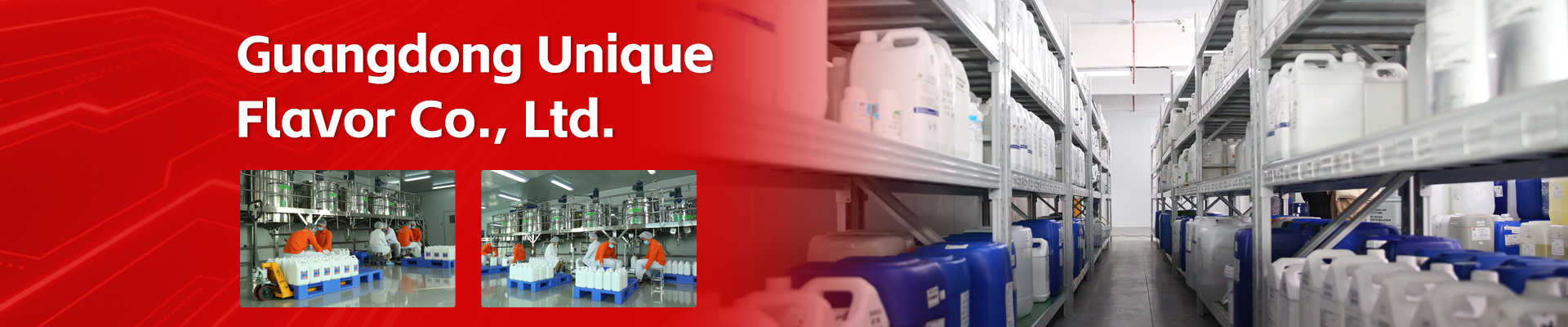
Published by: Guangdong Unique Flavor Co., Ltd.
Last Updated: Apr 07, 2026

Lab to Market Split
In the highly competitive landscape of the global food, beverage, and e-liquid industries, the introduction of a novel flavor is rarely a simple stroke of creative serendipity. It is, instead, the culmination of a rigorous, multi-disciplinary process that bridges the gap between molecular chemistry and consumer psychology. The journey of commercializing a new flavor—transforming an abstract sensory concept into a tangible, scalable, and compliant product—is fraught with technical challenges, regulatory hurdles, and manufacturing complexities.
For modern food and beverage manufacturers, understanding this trajectory is not merely a matter of academic interest; it is a fundamental business imperative. A flavor that performs exceptionally well in a controlled laboratory environment may degrade rapidly when exposed to the high shear forces of commercial blending, the thermal stress of pasteurization, or the acidic pH of a final beverage application. Furthermore, a successful formulation must navigate an increasingly complex web of international regulations, from the stringent safety assessments of the European Union to the specific national standards governing the Asian markets.
This comprehensive guide dissects the life cycle of flavor commercialization. By exploring the critical phases of molecular sensory design, formulation stability, regulatory compliance, pilot scale-up, and analytical quality control, we aim to provide procurement managers, R&D directors, and product developers with an authoritative blueprint for navigating the transition from the lab bench to the market shelf.
The genesis of any commercial flavor begins long before physical compounding takes place. It starts in the realm of molecular sensory design, where market data intersects with organic chemistry. Today’s flavor creation is driven by granular consumer insights—whether it is the demand for authentic, true-to-fruit tropical profiles, the rising interest in nostalgic botanical blends, or the need for advanced cooling sensations without the traditional peppermint aftertaste.
Flavorists (or flavor chemists) approach conceptualization by breaking down a target profile into its constituent volatile and non-volatile compounds. A natural strawberry flavor, for instance, is not a single entity but a delicate orchestration of hundreds of aromatic chemicals. Esters like ethyl butyrate provide the characteristic fruity, “bubblegum” top notes, while compounds like Furaneol impart the jammy, caramelized bottom notes essential for authenticity.
In specialized applications, such as e-liquids or functional beverages, the formulation matrix heavily influences how these molecules behave. The choice of carrier solvents—most notably the specific ratio of Propylene Glycol (PG) to Vegetable Glycerin (VG)—dictates the thermodynamic release of the flavor. PG acts as a highly effective carrier, offering sharp flavor articulation and a stronger throat hit due to its lower viscosity and higher solvency. Conversely, VG, being significantly more viscous and inherently sweet, tends to blunt sharp top notes but produces denser vapor and a smoother mouthfeel. A master flavorist must anticipate these solvent interactions during the initial design phase to ensure the intended profile translates accurately into the final medium.
Advancements in molecular biology have profoundly impacted how flavors are designed. Rather than relying solely on trial and error, modern R&D utilizes receptor mapping to engineer specific organoleptic responses. A prime example is the development of advanced cooling agents. By targeting the TRPM8 (Transient Receptor Potential Melastatin 8) cold-sensing receptors in the oral cavity and respiratory tract, scientists can formulate cooling compounds that deliver a prolonged, intense icy sensation without the distinct olfactory profile or bitterness associated with traditional menthol or camphor. This precise molecular targeting is critical when developing clean, fruit-forward beverage and e-liquid profiles where the integrity of the primary flavor must remain uncompromised by the cooling additive.
Once the theoretical framework of the flavor is established, the process transitions to physical compounding on the lab bench. This phase is characterized by relentless iterative testing, as the initial formulation is subjected to various stress conditions to evaluate its physiochemical stability.

High-Shear Homogenizer
Many liquid flavorings, particularly those involving citrus oils or lipid-soluble botanical extracts designed for aqueous beverage systems, are formulated as oil-in-water (O/W) emulsions. The thermodynamic instability of emulsions poses a significant commercialization hurdle. If left unmitigated, phenomena such as Ostwald ripening (where smaller droplets merge into larger ones), flocculation, and eventual phase separation (creaming or ringing) will occur, rendering the final consumer product visually unappealing and organoleptically inconsistent.
To combat this, formulations must employ precise ratios of emulsifiers and weighting agents. The integration of hydrocolloids, such as gum arabic or modified starches, helps to increase the viscosity of the continuous aqueous phase, thereby retarding droplet mobility. Furthermore, high-pressure homogenization is utilized to reduce the dispersed oil droplets to sub-micron sizes, drastically increasing the kinetic stability of the system.
When dealing with highly volatile top notes or compounds susceptible to rapid oxidation (such as the delicate terpene profiles in citrus flavors or the reactive aldehydes like cinnamaldehyde found in spice blends), traditional liquid formulations may fall short. In these instances, microencapsulation technology becomes indispensable.
Microencapsulation involves enveloping the active flavor compounds within a protective polymeric matrix. Techniques such as spray drying, coacervation, and melt-extrusion are employed to create microscopic, free-flowing powders. This protective wall not only prevents premature volatilization and oxidative degradation during a product’s shelf life but also allows for controlled release mechanisms. For example, a flavor might be encapsulated in a matrix designed to fracture only under specific mechanical shear during chewing, or to dissolve solely upon exposure to the acidic environment of the stomach, thereby maximizing the sensory impact exactly when intended. According to research highlighted in the Journal of Food Engineering, optimizing the wall-material composition—often utilizing complex carbohydrate and protein blends—can enhance flavor retention rates during thermal processing by over 40% compared to unencapsulated equivalents.
Before leaving the lab, the flavor must undergo rigorous compatibility testing within the intended final product base. A flavoring that is stable in a neutral pH water solution may rapidly degrade via acid-catalyzed hydrolysis when introduced into a low-pH carbonated soft drink. Similarly, the presence of proteins, vitamins, or specific metal ions in the product matrix can initiate unwanted Maillard reactions or lipid oxidation, resulting in off-notes and discoloration. Accelerated shelf-life testing, utilizing elevated temperatures and light exposure, allows formulators to predict these long-term degradation pathways and reformulate proactively by adding targeted antioxidants or adjusting the solvent system.
Perhaps the most formidable barrier between the lab bench and the commercial shelf is the labyrinth of global regulatory compliance. A technically flawless flavor formulation is commercially useless if it cannot legally be sold in the target market. Compliance is not an afterthought; it must be an integral parameter from the very first day of molecular design.
In the United States, the commercialization of food and beverage flavorings is heavily governed by the concept of “Generally Recognized as Safe” (GRAS). The Flavor and Extract Manufacturers Association (FEMA) plays a pivotal role in this ecosystem. Through the FEMA Expert Panel, flavoring substances are rigorously evaluated for safety based on toxicological data, metabolic fate, and estimated daily intake. Only when a compound achieves FEMA GRAS status can it be confidently utilized by commercial manufacturers without pre-market approval from the FDA.
The European market presents a distinct and often more stringent regulatory environment. The European Food Safety Authority (EFSA) oversees the authorization of flavoring substances under Regulation (EC) No 1334/2008. Unlike the GRAS system, the EU employs a positive list of authorized flavoring substances. If a specific molecule is not on the Union List, it cannot be used in food products sold within the EU. Furthermore, European regulations place strict maximum limits on the presence of certain biologically active principles (BAPs) that may occur naturally in botanical flavorings, such as coumarin from cinnamon bark or pulegone from mint extracts. Manufacturers targeting the EU must ensure their raw material sourcing and extraction methodologies strictly control these restricted compounds.
For manufacturers expanding into or exporting to the lucrative Chinese market, adherence to the GuoBiao (GB) national standards is non-negotiable. The cornerstone of flavor compliance in China is GB 2760, the National Food Safety Standard for the Use of Food Additives. This comprehensive document details the permitted natural and synthetic flavoring substances, the scope of food categories they can be applied to, and their maximum usage levels.
Additionally, manufacturers must comply with GB 30616, which governs the specific requirements for food flavorings, including sensory expectations, physicochemical indices, and safety parameters for heavy metals and solvent residues. Finally, GB 7718 dictates the stringent rules for the labeling of prepackaged foods, outlining exactly how “natural flavors” versus “artificial flavors” must be declared to the end consumer. Navigating the intersections of FEMA GRAS, EU Regulation 1334/2008, and the Chinese GB standards requires a dedicated regulatory affairs team equipped to manage the meticulous documentation and certification processes necessary for global commercialization.
A common industry adage states that “scale-up is not just making the beaker bigger.” Moving a flavor formulation from a 1-liter laboratory batch to a 5,000-liter commercial production run introduces a host of engineering and thermodynamic variables that can dramatically alter the final product.
In the pilot plant, the fluid dynamics and rheological properties of the flavor system become critical. Laboratory blenders impart a different type and magnitude of shear stress compared to massive commercial mixing vessels. If an emulsion-based flavor is subjected to inadequate shear during commercial production, the target droplet size will not be achieved, leading to rapid phase separation on the shelf. Conversely, excessive shear can cause cavitation and locally elevated temperatures, potentially flashing off highly volatile top notes.
Commercialization often requires the flavor to survive various sterilization techniques, such as High-Temperature Short-Time (HTST) pasteurization or Ultra-High Temperature (UHT) processing. These thermal shocks can fundamentally alter the flavor profile. Delicate esters may hydrolyze, while sugars and amino acids may undergo aggressive browning.
During the pilot scale-up, engineers must meticulously calibrate the time-temperature curves. Often, flavorists must “over-formulate” certain volatile components, intentionally overloading the lab sample with top notes to compensate for the anticipated loss during commercial pasteurization. This predictive compensation is a hallmark of an experienced commercial manufacturer, ensuring that the flavor profile after processing perfectly matches the original laboratory target.
The transition to full production necessitates the implementation of rigorous Quality Assurance (QA) and Quality Control (QC) protocols. B2B clients demand absolute batch-to-batch consistency; a strawberry flavoring delivered in January must possess the exact same organoleptic and physicochemical properties as a batch delivered in November.
This consistency is achieved through a combination of instrumental analysis and standardized operational procedures. Every incoming raw material must be vetted, and every outgoing batch must be verified against the established master specification. This leads us to the final, crucial phase of commercial validation.

Global Regulatory Map
To guarantee the integrity of a commercialized flavor, manufacturers rely on a dual-pronged approach to quality control: objective analytical chemistry and subjective human sensory evaluation. Neither is sufficient on its own; they must be used in tandem to provide a holistic assessment of the product.
At the core of the analytical laboratory is Gas Chromatography-Mass Spectrometry (GC-MS). This sophisticated instrumentation is utilized to separate, identify, and quantify the individual volatile components within a flavor mixture. By comparing the chromatogram of a new production batch against the benchmark “gold standard,” QA chemists can instantly detect any deviations in formulation, missing components, or the presence of unexpected impurities. GC-MS is essential for ensuring that complex profiles, such as the exact ratio of specific terpenes in a botanical blend, remain consistent at an industrial scale.
For non-volatile components, such as high-intensity sweeteners, colorants, or specific active botanical markers, High-Performance Liquid Chromatography (HPLC) is the tool of choice. Together, these instruments provide the objective, quantifiable data required by procurement managers and regulatory bodies to certify product specifications. As noted in industry standards published by organizations like the American Chemical Society, maintaining highly calibrated analytical profiles is the primary defense against flavor adulteration and supply chain inconsistencies.
Despite the unparalleled precision of modern analytical instruments, no machine can currently replicate the complex, holistic experience of human taste and olfaction. A batch of flavor may pass every GC-MS specification perfectly, yet still exhibit an unquantifiable “off-note” perceptible only to the human palate.
Therefore, professional organoleptic evaluation panels are a mandatory step in the commercialization process. These panels consist of highly trained sensory scientists who utilize standardized methodologies, such as descriptive analysis and difference testing (e.g., triangle tests), to evaluate the flavor’s aroma, taste, mouthfeel, and aftertaste. They assess the flavor not only in its concentrated form but, more importantly, dosed precisely into the final application matrix (e.g., a 10% sugar syrup, a dairy base, or an unflavored e-liquid base). Only when a commercial batch satisfies both the analytical instruments and the human sensory panel is it deemed ready for the market.
The final phase of commercializing a new flavor involves safeguarding its integrity during transport and storage, and integrating it seamlessly into the client’s supply chain.
The selection of packaging materials is a critical, often overlooked, aspect of flavor stability. Many aromatic compounds are highly reactive or possess strong solvent properties. If a flavoring is packaged in an incompatible polymer, “scalping” can occur. Flavor scalping is the process whereby volatile flavor compounds are absorbed into the plastic packaging material, resulting in a significantly muted flavor profile in the product.
Conversely, the packaging material itself can leach undesirable chemical compounds into the flavoring, imparting plasticky or metallic off-notes. To mitigate these risks, high-barrier packaging must be utilized. Fluorinated High-Density Polyethylene (HDPE) drums, epoxy-lined steel containers, or specialized aluminum flasks are commonly employed to provide an impermeable barrier against oxygen, light, and chemical migration, ensuring a prolonged and stable shelf life.
Bringing a new flavor to market is ultimately a partnership between the flavor manufacturer and the final product brand. It requires transparent communication regarding technical specifications, safety data sheets (SDS), certificates of analysis (COA), and precise usage recommendations. A true B2B flavor partner does not simply ship a drum of chemicals; they provide the technical support, application data, and regulatory documentation necessary for the brand to confidently launch their product to the end consumer.
Navigating the commercialization of new flavors from the lab bench to the market shelf is an intricate symphony of art, chemistry, engineering, and regulatory law. It demands a specialized infrastructure capable of executing precise molecular design, ensuring unyielding matrix stability, decoding international compliance standards like GB and EU regulations, and executing flawless industrial scale-up.
For brands operating in the fast-paced food, beverage, and e-liquid sectors, partnering with a flavor manufacturer who deeply understands the nuances of this commercialization pipeline is critical. It is the difference between a product that merely looks good on a lab report and a product that consistently delights consumers, batch after batch, anywhere in the world. The journey is complex, but with rigorous science and expert commercial strategy, the translation of a perfect flavor profile into a market-leading product is entirely achievable.

Modern Warehousing
Are you developing your next market-leading beverage, food product, or specialized e-liquid? Don’t leave your flavor commercialization to chance. Partner with a manufacturer that bridges the gap between innovative molecular design and flawless industrial execution.
Contact our dedicated technical team today to schedule an in-depth technical exchange regarding your specific project requirements, or request a customized, free sample of our high-performance flavorings to evaluate in your own applications. Let us help you turn your next big idea into a commercial reality.
| Contact Channel | Details |
| 🌐 Website: | www.cuiguai.cn |
| 📧 Email: | info@cuiguai.com |
| ☎ Phone: | +86 0769 8838 0789 |
| 📱 WhatsApp: | +86 189 2926 7983 |
| 📍 Factory Address | Room 701, Building 3, No. 16, Binzhong South Road, Daojiao Town, Dongguan City, Guangdong Province, China |
Copyright © 2025 Guangdong Unique Flavor Co., Ltd. All Rights Reserved.


