
Author: R&D Team, CUIGUAI Flavoring
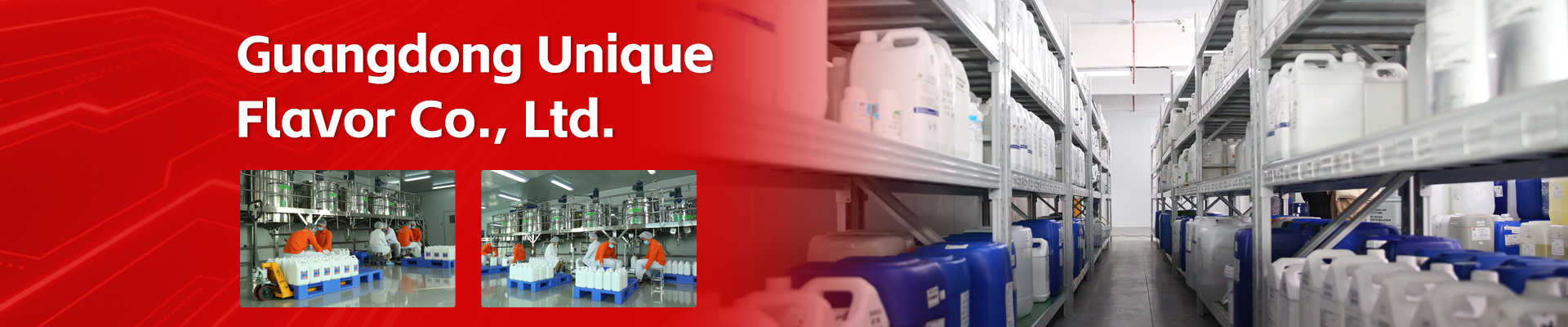
Published by: Guangdong Unique Flavor Co., Ltd.
Last Updated: Mar 26, 2026

The AI Chemist
The art of flavor creation—the delicate process of blending aromatic compounds to evoke a precise taste profile—is undergoing its most significant transformation since the invention of gas chromatography. Traditionally, flavor development has been a discipline of patient experimentation, relying heavily on the sophisticated palates of master flavorists and time-consuming iterative trials.
Today, the food and beverage industry faces unprecedented volatility. Consumer trends evolve in weeks, not years. The demand for healthier options (sugar/salt reduction), functional ingredients, and plant-based alternatives introduces complex off-notes that must be masked. Speed to market is no longer a luxury; it is a competitive necessity.
To meet these challenges, forward-thinking flavor manufacturers are transitioning from a solely intuitive approach to a data-driven, predictive model. This approach leverages the synergistic capabilities of Artificial Intelligence (AI), Machine Learning (ML), and Big Data. We are witnessing the rise of predictive taste development, where algorithmic accuracy complements human creativity.
This article explores the technical landscape of this paradigm shift, detailing how data is acquired, synthesized, and deployed to create the next generation of flavorings with unprecedented precision and speed.
Before predictive algorithms can function, they require high-quality, high-velocity, and diverse datasets. In flavor research, this data isn’t just sensory feedback; it is a multi-dimensional synthesis of chemical, perceptual, biological, and market information.
At its core, flavor is chemistry. A single flavor profile can consist of hundreds of volatile compounds interacting in a complex matrix. We utilize advanced analytical instrumentation to build the foundational datasets:
Reference Concept: The complexity of this data is highlighted by projects like the FlavorDB (a resource maintained by the Indraprastha Institute of Information Technology, Delhi, often referenced in computational gastronomy studies), which digitizes the flavor profiles of thousands of ingredients and their chemical constituents.
To train an AI model, the chemical input must be correlated with a human output.
Predictive models are more robust when they understand the environmental context.
Once these datasets are integrated, they are fed into Machine Learning models. In predictive taste development, the primary goal is to determine the optimal relationship between chemical composition (Features, or ‘X’) and sensory perception (Target, or ‘Y’).
Several ML architectures are particularly useful in flavor science:
Here, models are trained on historical data where both the chemical breakdown and the sensory panel results are known.
These models analyze unlabeled data to find inherent structures.
Reference: The use of clustering in analyzing chemical diversity is often detailed in publications from the American Chemical Society (ACS) and their divisions focused on Agricultural and Food Chemistry.
The frontier of predictive taste is generative models (like GANs or Variational Autoencoders).
The model, knowing the chemical “rules of engagement,” proposes candidates that a human flavorist can validate and refine.

Trend Mapping
We don’t deploy AI as a theoretical exercise; we use it to solve specific, complex problems in flavor manufacturing.
Reducing sugar or salt while maintaining product integrity is difficult. Sugar provides bulk, mouthfeel, and masks off-notes from functional ingredients. Simple removal compromises the sensory experience.
Plant proteins (pea, soy, oat, mung bean) often bring intense, unpleasant off-notes: “beany,” “grassy,” “cardboard,” or “chalky” bitterness. Standard masking techniques often rely on overpowering these notes with strong top notes, which can alter the desired final flavor.
Consumer preferences differ dramatically by region, age group, and lifestyle. A peach flavor that is popular in Southern California might fail in Northern China. Furthermore, the future of nutrition is personalization.
Reference: This concept of hyper-personalization driven by big data is frequently explored in reports from reputable organizations analyzing the future of food tech, such as the Institute of Food Technologists (IFT).

Robotic Compounding
A common concern is that AI will replace the flavorist. This view misinterprets the role of the technology. We view AI as an augmented intelligence tool that enhances, rather than replaces, human expertise.
Predictive models are exceptional at:
However, AI models lack sensory consciousness. They do not experience the “joy” of a perfect vanilla flavor. Human flavorists are essential for:
This hybrid approach, which we employ in our R&D labs, speeds up the iterative loop. Where a flavorist might traditionally achieve success after 20 manual trials over several weeks, the AI-human partnership can arrive at an optimal, validated formulation in 3 trials over a matter of days.
Despite the promise, several barriers remain:
Reference Concept: The fundamental biological complexity of this task—replicating the human olfactory system—is often detailed in research shared on platforms like Wikipedia (e.g., pages on Olfaction or Sensory Engineering), which summarize the current understanding of our sensory limitations.
The future of this technology will involve advancements in bio-electronic sensors (the “e-nose”) that can instantaneously digitize an aroma, providing AI models with a vast new stream of standardized olfactory data, bringing us closer to a “Universal Flavor Language.”

Product Journey
The integration of Big Data and AI into flavor research represents more than just a technological upgrade; it is a fundamental shift in the speed and accuracy of flavor development. By utilizing predictive taste development, we are not just matching consumer preferences; we are anticipating them.
For food and beverage manufacturers, this technology offers critical strategic advantages:
In an industry where the only constant is change, predictive flavor research provides the stability and foresight needed to build the taste profiles of tomorrow, today. As your advanced flavor manufacturing partner, we are committed to leveraging this digital toolkit to create flavorings that are faster, smarter, and sensory-superior.
Is your next product launch stuck in the iterative loop? Leverage our predictive flavor expertise to accelerate your R&D pipeline. Contact our technical team today for an in-depth technical exchange on how we use data science to solve complex flavor challenges, or request a free sample of one of our AI-optimized masking or sweetness-enhancing solutions.
| Contact Channel | Details |
| 🌐 Website: | www.cuiguai.cn |
| 📧 Email: | info@cuiguai.com |
| ☎ Phone: | +86 0769 8838 0789 |
| 📱 WhatsApp: | +86 189 2926 7983 |
| 📍 Factory Address | Room 701, Building 3, No. 16, Binzhong South Road, Daojiao Town, Dongguan City, Guangdong Province, China |
Copyright © 2025 Guangdong Unique Flavor Co., Ltd. All Rights Reserved.


