
Auteur : Équipe R&D, Arômes CUIGUAI
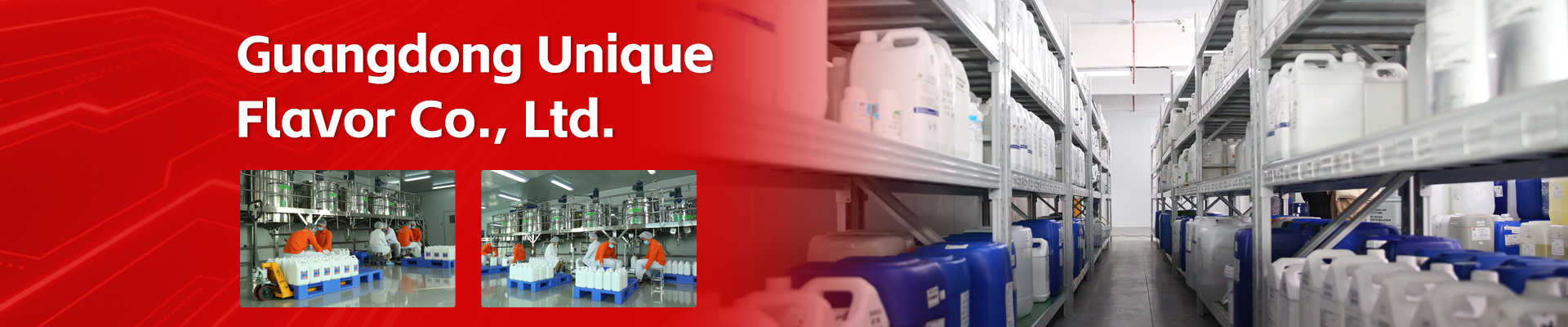
Publié par : Guangdong Unique Flavor Co., Ltd.
Dernière mise à jour : 25 mai 2026
WhatsApp & Telegram: +86 189 2926 7983

Laboratoire de saveurs moderne
Dans le paysage alimentaire et des boissons en rapide évolution d’aujourd’hui, la transition vers des produits à étiquette propre, naturels et biologiques n’est plus une tendance passagère — c’est une refonte fondamentale des attentes des consommateurs. À mesure que ces derniers deviennent plus informés sur les ingrédients de leur alimentation, leur demande de transparence explose. Ce changement de paradigme impose une responsabilité immense aux fabricants pour garantir que chaque composant de leur produit, jusqu’à la moindre goutte d’arôme, respecte des normes biologiques strictes.
En tant que fabricant professionnel d’arômes pour aliments et boissons, Guangdong Unique Flavor Co., Ltd. (CUIGUAI) comprend que la navigation dans le labyrinthe complexe de la certification biologique peut s’avérer une tâche ardue pour les marques du secteur. Une saveur est souvent une œuvre architecturale complexe, composée de dizaines, voire de centaines, de composés aromatiques, solvants et vecteurs. La certification d’un tel matrice exige une approche méticuleuse en matière d’approvisionnement, d’extraction, de mélange et de documentation.
Ce guide exhaustif se veut une ressource de référence pour les fabricants, les développeurs de produits et les responsables des achats dans l’industrie alimentaire et des boissons. Nous y analyserons ce que signifie réellement la formulation avec des saveurs biologiques, les cadres réglementaires mondiaux régissant ces certifications (avec une attention particulière aux marchés russes et de l’Union économique eurasiatique), les subtilités techniques des méthodes d’extraction conformes au biologique, ainsi que des stratégies concrètes pour intégrer avec succès des saveurs certifiées biologiques dans vos produits finis.
Avant d’aborder les aspects techniques de la certification biologique des saveurs, il est essentiel de comprendre les forces économiques qui animent ce mouvement. Selon des rapports de recherche approfondis de sociétés telles que Grand View Research, le marché mondial des aliments et boissons biologiques connaît une croissance annuelle composée (CAGR) soutenue, avec une projection atteignant des centaines de milliards de dollars d’ici la fin de la décennie (Citation 1 : Grand View Research, « Rapport d’analyse de la taille, des parts et des tendances du marché des aliments et boissons biologiques »).
Cette croissance ne se limite pas aux marchés occidentaux traditionnels tels que les États-Unis et l'Europe de l'Ouest. Les marchés émergents et les économies en transition, notamment la Fédération de Russie et l'Union économique eurasiatique (UEEA), connaissent une explosion de la demande pour des produits respectueux de l'environnement et biologiques. Les consommateurs examinent de plus en plus attentivement les étiquettes, évitant activement les additifs synthétiques, les colorants artificiels et les arômes chimiquement synthétisés.
Pour qu'un produit alimentaire ou une boisson porte le précieux label biologique — qu'il s'agisse du badge USDA Organic, de la feuille étoilée de l'UE ou de l'étiquette « Органик » (Biologique) russe — les arômes utilisés doivent strictement respecter les réglementations biologiques spécifiques à cette juridiction. Ne pas se procurer des arômes certifiés correctement peut entraîner l'échec de l'audit biologique, des reformulations coûteuses, des retards dans le lancement du produit et des atteintes à la réputation de la marque.
Pour garantir la certification biologique de vos arômes, il est essentiel de comprendre d’abord les différences fondamentales entre « naturel », « biologique » et « certifié biologique » en matière d’arômes.
Dans l'industrie des arômes, « naturel » et « biologique » ne sont pas synonymes. Un arôme naturel, tel que défini par des organismes industriels comme la Flavor and Extract Manufacturers Association (FEMA) et diverses agences réglementaires, est extrait de sources naturelles telles que fruits, légumes, épices, herbes, écorces, racines ou produits animaux, principalement à des fins de parfum plutôt que nutritionnelles (Référence 2 : FEMA – Association des fabricants d’arômes et d’extraits, « Qu’est-ce qu’un arôme ? »).
Bien qu'une saveur naturelle provienne de la nature, les matières premières agricoles qui la composent peuvent avoir été cultivées selon des méthodes agricoles conventionnelles, incluant l'usage de pesticides synthétiques, d'herbicides et d'engrais chimiques. De plus, l'extraction des saveurs naturelles peut impliquer l'utilisation de solvants chimiques agressifs tels que l'hexane, qui, même s'il est ultérieurement éliminé, disqualifie l'extrait d'être considéré comme biologique.
Une organic flavorD'autre part, il est requis que les matières premières agricoles utilisées pour élaborer la saveur (les plantes, fruits et épices) soient cultivées de manière biologique — sans pesticides synthétiques, gènes modifiés (OGM) ou engrais à base de pétrole. Plus important encore, toutes les étapes de traitement, d'extraction et de formulation doivent respecter des protocoles stricts de gestion biologique.
Une saveur commerciale est rarement constituée d’une simple huile essentielle ou d’un seul extrait. C’est une composition élaborée de trois éléments principaux :
Pour certifier une saveur comme biologique, le fabricant doit démontrer le statut biologique de chaque sous-composant. Cela exige une traçabilité ininterrompue, du champ jusqu'à l'usine de formulation des arômes.

Anatomie de l’arôme biologique
Obtenir la certification biologique exige de se conformer aux réglementations spécifiques du marché visé. Bien qu’il existe une certaine équivalence mutuelle entre les pays, de légères différences subsistent.
Aux États-Unis, les arômes biologiques sont régis par le National Organic Program (NOP) de l’USDA conformément à la partie 7 CFR 205 (Référence 3 : Service de commercialisation agricole de l’USDA, « Règlements du programme biologique national »). Pour qu’un produit alimentaire soit étiqueté « Bio » (ce qui signifie qu’il contient au moins 95 % d’ingrédients issus de l’agriculture biologique), tous les arômes utilisés doivent idéalement être certifiés biologiques.
Historiquement, les arômes naturels non biologiques étaient autorisés dans les aliments biologiques si un équivalent biologique n’était pas disponible sur le marché. Cependant, les réglementations se sont considérablement durcies. Aujourd’hui, les fabricants alimentaires sont fortement incités par les organismes de certification à se procurer des arômes certifiés biologiques dès qu’ils sont disponibles.
L’Union européenne a récemment mis à jour ses règlements biologiques (Règlement (UE) 2018/848), récemment entrés en vigueur. Selon ces règles strictes, l’utilisation d’arômes naturels dans les produits biologiques est fortement limitée. Seuls les arômes naturels provenant à 95 % de la source désignée (par exemple, « Arôme naturel de fraise », où 95 % de la partie aromatique provient directement de fraises) sont autorisés, et les régulateurs européens exigent de plus en plus que les préparations aromatiques elles-mêmes soient certifiées biologiques.
Pour nos partenaires et clients visant la Fédération de Russie et la vaste Union économique eurasiatique (UEE), la compréhension du cadre réglementaire local est essentielle. Les consommateurs russes accordent un profond respect aux produits fabriqués conformément aux normes strictes de l'État, connues sous le nom de GOST (ГОСТ).
Historiquement, le marché russe était marqué par une prolifération de termes tels que « Эко » (Éco), « Био » (Bio) et « Натуральный » (Naturel). Afin d’établir un ordre et de lutter contre le greenwashing, le gouvernement russe a introduit Federal Law No. 280-FZ on Organic ProductsCe qui définit fermement l’agriculture et la production biologiques. La norme de référence pour la production biologique en Russie est GOST 33980-2016 (“Produits biologiques. Règles de production, de transformation, d’étiquetage et de commercialisation”) (Citation 4 : Agence fédérale pour la réglementation technique et la métrologie (Rosstandart), GOST 33980-2016).
Pour qu'un arôme puisse être utilisé dans un produit biologique certifié en Russie, il doit respecter la norme GOST 33980-2016. Cela implique :
Pour les acheteurs B2B russes, se procurer des arômes déjà accompagnés d'une documentation complète prouvant leur conformité aux normes biologiques TR CU 029/2012 et GOST constitue un avantage concurrentiel considérable. Cela facilite la certification finale de leurs produits et réduit le délai de mise sur le marché.
Le cœur de la fabrication des saveurs biologiques réside dans le processus d’extraction. Vous pouvez posséder les botanicals biologiques les plus magnifiquement cultivés, exempts de pesticides, mais si vous les traitez avec des solvants synthétiques agressifs, leur statut biologique est immédiatement annulé.
Chez CUIGUAI, nous privilégions une chimie propre et écologique pour garantir l’intégrité de nos saveurs. Voici un regard approfondi sur les technologies d’extraction autorisées pour la fabrication de saveurs biologiques certifiées.
Pour comprendre l'extraction biologique, il est primordial de connaître d'abord ce qui est interdit. L'utilisation de solvants pétrochimiques volatils—notamment hexaneLe toluène et l’éther de pétrole sont strictement interdits dans les procédés biologiques. L’hexane est largement utilisé dans l’extraction conventionnelle de saveurs en raison de son efficacité exceptionnelle pour extraire les huiles essentielles et les oléorésines des matrices botaniques résistantes. Cependant, de petites quantités d’hexane peuvent subsister dans le produit final, et son impact environnemental est considérable. C’est pourquoi les organismes de certification biologique à travers le monde en interdisent l’usage.
La pression à froid est l’une des méthodes d’extraction de saveurs les plus anciennes et naturelles, principalement utilisée pour les agrumes (oranges, citrons, limes et bergamotes). Les zestes des fruits biologiques sont mécaniquement perforés ou pressés, libérant ainsi les huiles essentielles stockées dans le flavedo (l’écorce extérieure). En raison de l’absence de chaleur et de solvants ajoutés, cette méthode préserve parfaitement les notes de tête volatiles des fruits et est intrinsèquement conforme à toutes les normes biologiques mondiales, y compris GOST 33980-2016.
La distillation à la vapeur est le pilier de l'industrie des arômes et parfums biologiques. Dans ce procédé, de la vapeur sous pression traverse des matières végétales biologiques (telles que la menthe, l'écorce de cannelle ou la lavande). La chaleur de la vapeur provoque l’éclatement des structures cellulaires, libérant ainsi les composés aromatiques volatils. La vapeur chargée d’huile essentielle se dirige ensuite vers une chambre de condensation où elle se refroidit, redevenant liquide. Étant donné que l'huile et l'eau ne se mélangent pas, l'huile essentielle flotte à la surface et est récupérée par siphonnage.
Cette méthode ne nécessite que de l'eau et de la chaleur, assurant une conformité totale avec les normes biologiques. Elle est idéale pour les herbes et épices robustes, mais peut parfois altérer les saveurs délicates et sensibles à la chaleur des fruits.
Lorsque l'extraction nécessite un solvant (souvent indispensable pour la fabrication de teintures, extraits et absolus), les fabricants biologiques doivent recourir à des solvants certifiés biologiques. Le plus couramment utilisé est certified organic ethyl alcohol (ethanol)Généralement dérivés de canne à sucre, de maïs ou de blé biologiques.
La glycérine végétale biologique (issue de soja ou de palme biologiques, sourcing durable) et les huiles végétales biologiques (comme l’huile de tournesol biologique) sont également couramment utilisées. L’eau, bien sûr, est un solvant universellement accepté, souvent combiné à l’éthanol biologique pour extraire un large spectre de composés aromatiques solubles dans l’eau comme dans l’alcool à partir de la matière première.
L'extraction par dioxyde de carbone supercritique (CO2) incarne l'apogée de la technologie des saveurs propres. Dans ce procédé de pointe, le dioxyde de carbone est soumis à une pression élevée et à une température basse jusqu’à atteindre un état « supercritique »—présentant à la fois les propriétés d’un liquide et d’un gaz.
Dans cet état, le CO2 agit comme un solvant extrêmement efficace et modulable. Il peut pénétrer le matériau végétal comme un gaz et dissoudre les huiles aromatiques comme un liquide. Une fois l'extraction terminée, la pression est simplement relâchée. Le CO2 redevient un gaz et se dissipe complètement, laissant derrière lui un extrait d’arôme d’une pureté exceptionnelle, hautement concentré, sans aucun résidu de solvant.
Étant un gaz naturellement présent, non toxique et non inflammable, ce procédé est largement salué par les organismes de certification biologique à travers le monde. De plus, son fonctionnement à basse température préserve parfaitement les notes de tête délicates, sensibles à la chaleur, des fruits et des fleurs, que la distillation à la vapeur pourrait endommager.

Extraction au CO2 supercritique
L’intégrité d’une saveur biologique n’est aussi forte que son maillon le plus faible. Pour qu’un fabricant de saveurs produise un produit certifié biologique, il doit mettre en œuvre un système rigoureux de gestion de la chaîne d’approvisionnement et de traçabilité.
Le voyage commence à la ferme. Les fabricants de saveurs doivent s’assurer que leurs fournisseurs agricoles détiennent des certificats biologiques valides. Cela implique que les terres où poussent les botanicals doivent être exemptes de substances interdites depuis au moins trois années avant la récolte. Les agriculteurs doivent démontrer des pratiques favorisant la fertilité des sols, la rotation des cultures et la biodiversité.
À l'arrivée des matières premières biologiques dans une usine de composition de saveurs, le véritable défi commence. La majorité des maisons de saveurs produisent à la fois des arômes conventionnels et biologiques. Pour éviter tout mélange (mêlée de matières organiques et non-organique) et toute contamination, des protocoles stricts doivent être appliqués en permanence.
Cela implique
Pour gérer cette charge de données immense, les entreprises de saveurs innovantes s'appuient sur des logiciels avancés de planification des ressources d'entreprise (ERP). Nous vous invitons à en savoir plus sur la manière dont les logiciels logistiques modernes garantissent cette traçabilité dans notre article de blog détaillé sur l'exploitation de la technologie pour la visibilité et le contrôle des stocks de saveurs, qui met en lumière l'infrastructure technologique nécessaire à une production de saveurs impeccable.
La création d’un produit alimentaire ou de boisson avec des saveurs biologiques pose des défis singuliers aux développeurs et aux scientifiques en R&D. Les saveurs biologiques se comportent souvent différemment de leurs homologues synthétiques.
Les arômes synthétiques sont d’une concentration extrême. Une seule goutte d’un composé synthétique peut aromatiser une grande quantité de produit. Les saveurs biologiques, qui reposent strictement sur des extraits naturels et des huiles essentielles, sont généralement moins concentrées. Par conséquent, les formulateurs doivent souvent utiliser des doses plus élevées de saveurs biologiques pour obtenir le même impact sensoriel. Cela doit être pris en compte dans le coût de revient du produit (COGS) ainsi que dans le volume global de la recette.
De nombreux arômes biologiques, notamment les saveurs de fruits obtenues par pressage à froid ou par extraction douce à l’éthanol, sont très volatils et sensibles à la chaleur. Lors d’applications à haute température, comme la cuisson, l’extrusion ou la pasteurisation UHT pour les boissons, ces notes de tête délicates peuvent s’évaporer rapidement ou se dégrader, laissant un profil gustatif plat ou altéré.
Pour remédier à cela, les flavoristes experts de CUIGUAI recourent à des techniques sophistiquées d'encapsulation biologique ou utilisent des systèmes porteurs organiques plus résistants et stables à la chaleur (tels que les huiles végétales biologiques) afin de préserver les composés aromatiques tout au long du processus de fabrication.
Par exemple, lors de la formulation d’un produit de boulangerie, vous pouvez nécessiter un profil robuste capable de résister à la cuisson. Découvrez notre arôme Café Intense, qui illustre comment des notes torréfiées profondes et riches peuvent être conçues pour supporter un traitement rigoureux tout en conservant leurs caractéristiques sensorielles authentiques.
Alternativement, pour l’extrusion de snacks salés — un procédé à haute température et haute pression — les fabricants requièrent des saveurs puissantes et résistantes à l’extrudeuse. Notre saveur forte de piments grillés illustre parfaitement un profil salé conçu pour un impact élevé et une stabilité dans des matrices alimentaires exigeantes.
La solubilité d’une saveur biologique est essentielle pour la clarté et la sensation en bouche du produit final. Si vous développez une boisson gazeuse claire et biologique, vous devez utiliser une saveur soluble dans l’eau (généralement avec un support d’éthanol biologique). Si vous utilisez une saveur à base d’huile, elle ne se dissoudra pas dans l’eau, entraînant un anneau nuageux peu attrayant au sommet de la bouteille.
Inversement, pour les systèmes à base de matières grasses tels que les chocolats biologiques ou les enrobages composés, les saveurs à base d’eau peuvent provoquer la seizing du chocolat. Dans ces applications, il est impératif d’utiliser une saveur biologique soluble dans l’huile.
Pour des applications délicates telles que les produits laitiers ou les boissons transparentes où une note fruitée vive et authentique est souhaitée, la précision est essentielle. Un produit comme notre arôme Fraise fraîche démontre la capacité à fournir des profils fruités nets, purs et authentiques, s'intégrant harmonieusement dans des matrices de boissons complexes sans provoquer de turbidité ni de séparation de phases.
Une fois votre produit formulé avec succès à l’aide d’arômes certifiés biologiques, le dernier obstacle est la gestion de la chaîne d’approvisionnement. La recherche d’arômes biologiques implique souvent des délais plus longs en raison des cycles de récolte agricoles, des dépendances météorologiques et des processus d’audit rigoureux nécessaires avant la libération d’un lot.
Pour les opérations multinationales dans le secteur alimentaire et des boissons, la gestion de cette chaîne d'approvisionnement complexe est essentielle pour éviter les arrêts de production. La consolidation de vos achats d'arômes auprès d’un fournisseur unique, hautement certifié et techniquement compétent, peut réduire considérablement votre charge administrative. En centralisant vos achats, vous simplifiez votre processus d’audit biologique, en traitant avec un seul ensemble cohérent de documents de conformité plutôt que de rechercher des certificats auprès de nombreux fournisseurs.
Pour approfondir les avantages stratégiques de cette démarche, nous vous invitons vivement à consulter nos analyses sur Les bénéfices de l'approvisionnement centralisé en arômes pour les opérations multinationales.
De plus, la gestion de la durée de conservation et des conditions de stockage des arômes biologiques nécessite une précision extrême. En l'absence de conservateurs synthétiques agressifs, les arômes biologiques sont plus vulnérables à l'oxydation et à la dégradation s'ils ne sont pas stockés correctement. La mise en place d’un système de gestion des stocks efficace garantit l’utilisation de ces ingrédients de qualité à leur apogée. Découvrez comment optimiser vos délais de production dans notre article, Livraison à la demande : rationaliser votre calendrier de fabrication.
Si vous êtes une marque alimentaire ou de boissons préparant votre audit annuel de certification biologique, disposer d’une documentation complète et irréprochable sur vos arômes est indispensable. Les organismes de certification examineront minutieusement les ingrédients que vous utilisez.
Afin d'assurer une vérification sans encombre, il est recommandé de solliciter auprès de votre fournisseur d'arômes (tel que CUIGUAI) la documentation suivante pour chaque saveur biologique acquise:
En collaborant avec un fabricant d’arômes professionnel qui fournit proactivement cette documentation complète, vous transformez l’audit biologique redouté en une procédure fluide et routinière.
Obtenir et préserver la certification biologique de vos produits alimentaires et de vos boissons constitue un défi exigeant, mais d'une richesse incommensurable. Le consommateur moderne—qu'il soit en Amérique du Nord, en Europe ou sur le marché russe en pleine expansion—exige transparence, pureté et authenticité.
Les arômes que vous choisissez constituent la signature sensorielle de votre marque. Ils déterminent si un consommateur achètera votre produit une seconde fois. En privilégiant des saveurs biologiques de haute qualité, extraites selon une chimie propre et appuyées par une documentation irréfutable, vous préservez l’intégrité de votre marque et vous positionnez à l’avant-garde du mouvement mondial du « clean label ».
Chez Guangdong Unique Flavor Co., Ltd. (CUIGUAI), nous comblons le fossé entre les profils botaniques authentiques de la nature et les exigences techniques rigoureuses de la fabrication alimentaire moderne. Nous maîtrisons les subtilités de la conformité mondiale, du USDA NOP à la norme EAEU TR CU 029/2012 et GOST 33980-2016.

Certifications biologiques mondiales
Naviguer dans la formulation des arômes et la conformité réglementaire nécessite un partenaire technique dédié. Nous invitons les technologues alimentaires, les chercheurs en R&D et les responsables des achats à collaborer avec notre équipe d’ingénierie des arômes.
Appel à l'action :
Vous développez un nouveau produit biologique ou envisagez de faire évoluer une formule existante pour répondre aux normes strictes de l’agriculture biologique ? Permettez-nous de vous accompagner dans la résolution de vos défis de formulation.
Contactez-nous dès aujourd’hui pour un échange technique approfondi ou pour demander des échantillons de saveurs gratuits et personnalisés pour votre prochain projet.
| Canal de contact | Détails |
| 🌐 Site Web : | www.cuiguai.cn |
| 📧 Courriel : | info@cuiguai.com |
| ☎ Téléphone : | +86 0769 8838 0789 |
| 📱 WhatsApp : | +86 189 2926 7983 |
| 📱 Telegram: | +86 189 2926 7983 |
| 📍 Adresse de l'usine | Chambre 701, Bâtiment 3, No. 16, Rue Binzhong Sud, Town de Daojiao, Ville de Dongguan, Province du Guangdong, Chine |
Laissez CUIGUAI être l’ingrédient invisible et essentiel du succès de votre marque.
Droits d'auteur © 2025 Guangdong Unique Flavor Co., Ltd. Tous droits réservés. Return and Exchange Policy


