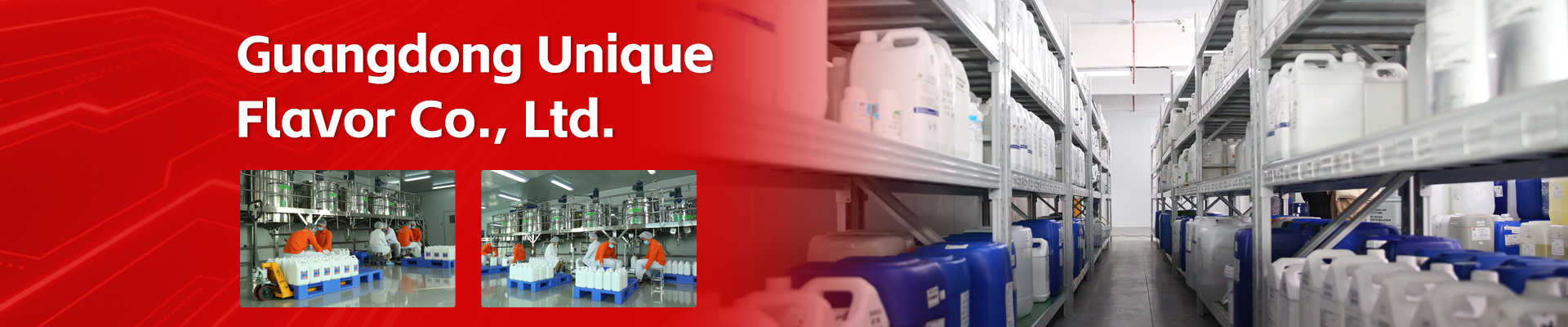
Author: R&D Team, CUIGUAI Flavoring
Published by: Guangdong Unique Flavor Co., Ltd.
Last Updated: Apr 22, 2026

Lab R&D
In the rapidly evolving landscape of the food and beverage industry, consumer demands are constantly shifting. Today’s consumers want it all: reduced sugar, higher protein, functional benefits, and clean labels. However, formulating products that meet these nutritional demands often introduces a complex array of sensory challenges. When you add botanical extracts for energy, swap dairy for plant-based proteins, or replace sucrose with high-intensity sweeteners, you inevitably introduce undesirable tastes and aromas—commonly referred to in the industry as “off-notes.”
For product developers, R&D scientists, and food technologists, fixing these off-notes is often the most critical hurdle between a promising prototype and a commercially successful product. A formulation might boast an impeccable nutritional panel, but if the sensory experience is compromised by a lingering bitterness or an earthy aftertaste, it will fail to secure repeat purchases.
This comprehensive technical guide explores the science of flavor perception, the chemical origins of common off-notes, and the advanced strategies required to neutralize them. From utilizing specialized off-note masking flavours to deploying a highly targeted bitter masking solution, we will delve into the technical methodologies that allow manufacturers to achieve perfectly balanced, consumer-approved profiles.
Before we can effectively mask an off-note, we must understand how it is perceived at a biological level. The human gustatory system is a marvel of evolutionary biology, designed to evaluate the safety and nutritional value of what we consume.
Taste perception begins when chemical compounds in food dissolve in saliva and bind to specific taste receptors on the taste buds. Humans possess five primary taste modalities: sweet, sour, salty, bitter, and umami. The perception of off-notes usually falls into the categories of bitterness, astringency (a tactile sensation rather than a true taste), sourness, or complex olfactory off-aromas (such as metallic, beany, or earthy notes).
Off-notes are typically inherent to the functional ingredients themselves, or they are the result of chemical reactions during processing and storage:
Citation 1: According to the National Institutes of Health (NIH) and extensive sensory research, humans possess roughly 25 distinct bitter taste receptors (T2Rs) compared to only a few for sweetness. This evolutionary trait was designed to protect early humans from ingesting toxic plants, explaining why bitterness is the most intensely perceived and difficult-to-mask off-note in modern functional foods.
Understanding these origins is the first step in sensory optimization. To ensure that your new flavor profiles hit the mark, modern product development relies heavily on advanced analytical and sensory evaluation. For deeper insights into optimizing this phase, read our guide on Accelerating Flavor Discovery: Modern Techniques in Sensory Analysis.
To deploy the correct off-note masking flavours, a formulator must first precisely identify the sensory “enemy.” Off-notes are rarely a monolithic problem; they are often a combination of tastes, aromas, and mouthfeel issues.
Bitterness is the most prevalent formulation challenge. It is commonly introduced by caffeine, green tea extract, amino acids, hydrolyzed proteins, and botanical adaptogens. Bitterness is sharp, immediate, and can linger on the back of the tongue long after swallowing.
Often confused with bitterness, astringency is a tactile sensation—a dry, puckering feeling in the mouth. It is caused by tannins and polyphenols found in teas, certain fruits (like cranberry and pomegranate), and whey protein isolates. Astringent compounds bind to salivary proteins, causing them to precipitate and stripping the mouth of its natural lubrication.
Metallic off-notes are most frequently encountered in products fortified with vitamins and minerals (especially iron, copper, and zinc), as well as in beverages packaged in certain metal cans without proper liners. Artificial sweeteners like saccharin can also trigger a metallic receptor response.
The rise of the plant-based sector has made this category of off-notes highly relevant. Soy and pea proteins contain lipoxygenases that oxidize fatty acids, creating volatile compounds like hexanal. These register in the olfactory system as grassy, beany, or reminiscent of raw cardboard.
Natural high-intensity sweeteners like steviol glycosides (Reb A, Reb M) are incredibly popular for sugar reduction. However, their molecular structure causes them to bind to sweet receptors differently than sucrose, resulting in a delayed onset of sweetness and a lingering, licorice-like (anise) aftertaste that consumers often find highly artificial.

Sensory Chart
Historically, the food industry relied on a simple, brute-force method to hide off-notes: covering them up with excessive amounts of sugar, salt, or fat. Sucrose, in particular, is an excellent natural masking agent because it overwhelms the sweet receptors, distracting the brain from underlying bitterness or acidity.
However, in the era of health-conscious consumption, this approach is entirely obsolete. You cannot formulate a “Low Sugar Functional Energy Drink” and then mask the caffeine bitterness with 30 grams of high-fructose corn syrup.
Modern flavor masking is an elegant, scientifically driven discipline. It involves using highly specialized off-note masking flavours and modulators that operate at the molecular and neurological levels. Instead of overwhelming the palate, modern masking agents trick the brain, block receptors, or chemically bind to the offending molecules to neutralize them without adding calories or altering the fundamental nutritional profile of the product.
This transition from physical cover-ups to precise modulation represents a significant leap in food science. For a look at how formulations move from these complex R&D stages to commercial success, explore our article: From Lab Bench to Market Shelf: Navigating the Commercialization of New Flavors.
How exactly do these modern masking solutions work? Flavor houses and food scientists utilize four primary mechanisms to mitigate off-notes. Often, the most effective off-note masking flavours utilize a combination of these approaches.
This is a physiological approach. Masking agents are formulated to possess molecular structures that bind to the tongue’s specific taste receptors (such as the T2R bitter receptors) without triggering a taste signal to the brain. By occupying the receptor site, the masking agent acts as an antagonist, physically preventing the actual bitter or metallic compound from binding. This effectively “blinds” the consumer’s taste buds to the off-note.
Taste and smell are inextricably linked. Cross-modal masking uses the olfactory system (aroma) to alter gustatory perception (taste). For example, adding a sweet-associated aroma like vanilla or caramel can trick the brain into perceiving a product as sweeter and less bitter than it actually is, without adding any actual sugar. Strong citrus oils or vibrant berry notes can also be used to distract the sensory processing centers of the brain away from earthy or beany notes.
In some cases, the solution lies in food chemistry rather than human biology. Certain masking agents can chemically bind to the offending molecule in the food matrix, creating a complex that is too large to fit into the taste receptors on the tongue.
Alternatively, physical microencapsulation can be used. By encapsulating a bitter vitamin or a highly reactive mineral within a lipid or carbohydrate shell, the ingredient passes through the mouth undetected and is only released once it reaches the digestive tract.
Rather than blocking the bad, this method enhances the good. Modulators can be used to accelerate the onset of sweetness (to fix the delayed sweetness of stevia) or to enhance mouthfeel (to fix the thin, watery texture of sugar-reduced beverages), thereby restoring the overall sensory balance of the product.
Citation 2: The Flavor and Extract Manufacturers Association (FEMA) plays a crucial role in the evaluation of flavor modulators and masking agents. Through their Generally Recognized as Safe (GRAS) program, FEMA ensures that novel masking molecules and complexation agents are rigorously evaluated for safety before they are deployed in commercial food and beverage applications.
Because bitterness triggers such a strong, innate rejection response in consumers, developing a robust bitter masking solution is the holy grail of flavor modulation.
Unlike sweetness, which is generally triggered by a narrow range of molecular shapes, bitterness can be triggered by thousands of chemically diverse compounds—from peptides to alkaloids to polyphenols. This means there is no “one-size-fits-all” bitter masking solution. The masker that neutralizes caffeine in an energy drink will likely fail to neutralize the bitter saponins in a pea protein shake.
A targeted bitter masking solution requires a deep understanding of the product’s active ingredients.
Interestingly, emerging research indicates that our perception of bitterness and overall flavor is not solely dictated by our taste buds, but also by our internal biology. To understand how individual physiological differences affect flavor acceptance, review our post on The Role of Gut Microbiome in Flavor Perception: New Research Insights.

Molecular Action
The application of off-note masking flavours varies wildly depending on the food or beverage matrix. Let’s examine how these solutions are applied across the fastest-growing industry sectors.
Achieving the perfect flavor profile is a systematic process. Whether you are working with an in-house R&D team or partnering with a flavor house like Guangdong Unique Flavor Co., Ltd., following these best practices will streamline your development cycle.
Never use masking agents as a crutch for poor formulation. Before applying flavors, optimize your base. Can you source a cleaner-tasting pea protein isolate? Can you adjust the pH to naturally reduce astringency? A cleaner base requires less masking, which lowers costs and improves final quality.
Conduct a descriptive sensory analysis with a trained panel on your unflavored, unmasked base. Identify exactly which off-notes are present and score their intensity. You cannot fix what you have not accurately measured.
Work closely with your flavor supplier to select off-note masking flavours specific to your base. As established, a bitter masking solution designed for caffeine will not work for stevia. Demand tailored solutions.
Once the base is masked and neutralized to a “blank canvas,” select characterizing flavors that naturally synergize with the product. For instance, dark chocolate or coffee flavors naturally accommodate slight residual bitterness, while vanilla or tropical fruits are excellent for smoothing out plant proteins.
Masking agents are complex chemical compounds. They must remain stable throughout the product’s shelf life. Thermal processing (retort, UHT), UV exposure, and pH fluctuations can degrade masking agents over time, causing the off-notes to reappear months after production.
Citation 3: According to research published in the Journal of Food Science, flavor stability is highly dependent on the food matrix and processing conditions. The study highlights that flavor encapsulation and the selection of heat-stable modulators are critical for maintaining sensory integrity over a standard 12-month shelf life in beverage applications.
Today’s consumer flips the package to read the ingredient list before they buy. This has driven a massive demand for “Clean Label” products.
Historically, flavor masking agents were heavily synthetic. Today, the challenge is to formulate powerful off-note masking flavours that can legally be labeled as “Natural Flavors” or even as recognizable food ingredients.
Innovations in biotechnology have paved the way for clean-label masking. Many modern masking agents are derived from:
Citation 4: The U.S. Food and Drug Administration (FDA) strictly defines “Natural Flavor” in the Code of Federal Regulations (21 CFR 101.22). It stipulates that the flavor constituent must be derived from a spice, fruit, vegetable, edible yeast, herb, bark, bud, root, leaf, or similar plant material, meat, seafood, poultry, eggs, or dairy products, whose significant function in food is flavoring rather than nutritional. Ensuring your masking agents comply with these definitions is essential for clean-label claims.
The future of flavor masking is incredibly exciting, driven by the convergence of food science, artificial intelligence, and advanced manufacturing.
The modern food and beverage landscape is unforgiving. Consumers demand products that are healthier, more functional, and cleaner than ever before, but they absolutely refuse to compromise on taste.
Off-notes—whether they are the harsh bitterness of caffeine, the grassy undertones of plant proteins, or the lingering aftertaste of stevia—are inevitable byproducts of functional formulation. However, they do not have to be the downfall of your product.
By leveraging the science of sensory perception and utilizing highly advanced off-note masking flavours and targeted bitter masking solutions, product developers can conquer these challenges. Modern flavor modulation allows you to strip away the negative sensory attributes, leaving a clean, balanced canvas upon which you can build an unforgettable flavor experience for your consumers.
The key to success lies in understanding your base, identifying your sensory enemies, and partnering with flavor experts who possess the technical capabilities to neutralize them.

Finished Products
Don’t let off-notes hold your innovative formulations back. At Guangdong Unique Flavor Co., Ltd., our expert flavorists specialize in cutting-edge flavor modulation. Whether you are struggling with a challenging plant protein base, formulating a high-caffeine energy drink, or seeking a clean-label bitter masking solution, we have the technology and the expertise to help you succeed.
Let’s solve your flavor challenges together. Reach out to our R&D team today for a technical exchange, and request a Free Sample of our advanced off-note masking flavours tailored specifically to your product matrix.
Contact Us Today:
| Contact Channel | Details |
| 🌐 Website: | www.cuiguai.cn |
| 📧 Email: | info@cuiguai.com |
| ☎ Phone: | +86 0769 8838 0789 |
| 📱 WhatsApp: | +86 189 2926 7983 |
| 📱 Telegram: | +86 189 2926 7983 |
| 📍 Factory Address | Room 701, Building 3, No. 16, Binzhong South Road, Daojiao Town, Dongguan City, Guangdong Province, China |
Browse Our Catalog: Request a Quote / Send Inquiry Now
Copyright © 2025 Guangdong Unique Flavor Co., Ltd. All Rights Reserved.