
Author: R&D Team, CUIGUAI Flavoring
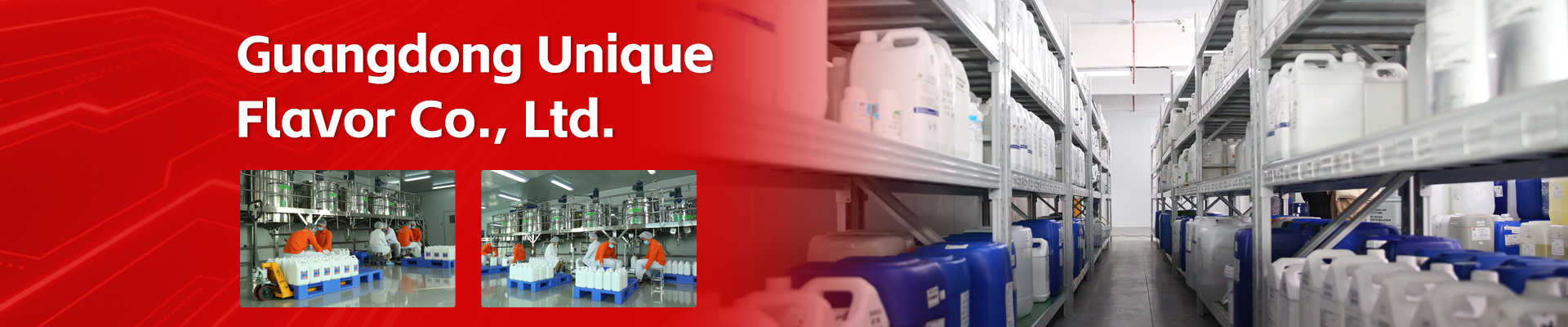
Published by: Guangdong Unique Flavor Co., Ltd.
Last Updated: May 20, 2026
WhatsApp & Telegram: +86 189 2926 7983

Precision Flavor Extraction
The global flavor and fragrance industry is undergoing a massive structural transformation, driven by evolving consumer palates, technological breakthroughs in extraction, and increasingly stringent international safety frameworks. For manufacturers, procurement directors, and chief food technologists operating within the Russian Federation and the broader Eurasian Economic Union (EAEU), sourcing high-quality, compliant food-grade and e-liquid flavorings from China represents an unparalleled commercial opportunity. However, it also presents a complex, multi-layered regulatory matrix.
Bilateral trade between China and the EAEU has expanded exponentially. Russian consumer packaged goods (CPG) markets, beverage manufacturers, and the highly dynamic e-liquid sector are demanding sophisticated, multi-layered, and highly stable flavor profiles. These range from authentic, hyper-realistic fruit recreations to advanced physiological cooling sensations. Yet, a seamless cross-border supply chain requires far more than matching a sensory profile. It demands a rigorous chemical and legal understanding of how Chinese national standards—specifically GB 2760 and GB 30616—intersect with Russian and EAEU regulations, such as the Technical Regulation of the Customs Union TR CU 029/2012.
This comprehensive technical guide serves as an authoritative operational blueprint for Eurasian enterprises importing specialized flavor compounds from China. We will analyze the core pillars of Chinese food safety standards, cross-reference them with European (EU 1334/2008) and EAEU frameworks, and dive deep into the technical chemistry required to maintain flavor stability, solubility, and compliance across borders. From advanced microencapsulation matrices to the molecular mechanics of synthetic cooling agents like WS-23, understanding this landscape is the ultimate key to mitigating supply chain risks and achieving rapid time-to-market.
For deeper insights into raw material analysis, production methodologies, and regular compliance updates, you can explore our dedicated technical blog.
To confidently establish an import pipeline for flavorings from China, technical teams must first master the domestic regulatory architecture that governs their synthesis, compounding, and quality control at the point of origin. The Chinese regulatory ecosystem for food additives is highly centralized, science-backed, and updated meticulously to reflect ongoing global toxicological evaluations. The two absolute cornerstones of this system are GB 2760 and GB 30616.
GB 2760, titled the National Food Safety Standard for Uses of Food Additives, is the foundation of Chinese food-grade chemical regulations [1]. Promulgated jointly by the National Health Commission (NHC) and the State Administration for Market Regulation (SAMR), this standard operates on a strict, unyielding “Positive List” principle. Simply put: if a chemical substance, synthetic aromatic compound, or natural botanical extract is not explicitly listed, defined, and assigned a maximum permissible dosage within the annexes of GB 2760, it cannot be legally manufactured, blended, or utilized as a food additive within the People’s Republic of China, nor can it be certified for standard export as a food-grade product.
For international buyers, particularly those in Russia, GB 2760 acts as an automated safety filter. The standard explicitly categorizes permissible flavoring agents into three distinct operational domains:
When vetting a Chinese manufacturing partner, a Russian importer’s first step should be demanding a comprehensive component audit. This ensures that every individual aromatic chemical within a compounded flavor formula matches an active entry and chemical identification code within GB 2760.
While GB 2760 dictates which specific molecules are legally permitted to exist in a flavorist’s organoleptic organ, GB 30616 (National Food Safety Standard for Food Flavorings) establishes exactly how these molecules must be physically formulated, stabilized, tested, labeled, and packaged.
GB 30616 sets forth mandatory physical-chemical compliance thresholds that directly impact product quality and shelf-life stability. Any compounded liquid, powder, or emulsion flavor failing these baseline criteria is legally deemed non-compliant:
Because the Russian Federation’s food safety infrastructure heavily adopts toxicological reference points from Western European models, checking how Chinese standards align with the European Union is highly beneficial. EU Regulation (EC) No 1334/2008 governs flavorings and specific food ingredients with flavoring properties inside the European marketplace [2].
Advanced Chinese manufacturing facilities catering to global export markets maintain active, side-by-side cross-reference matrices. They map GB 2760 chemical entries directly to the European Union Common List of Flavoring Substances. For a Russian importer, purchasing a flavor compound that demonstrates dual-compliance across both GB 2760 and EU 1334/2008 offers a massive regulatory advantage. It indicates that the underlying toxicological dossiers are highly standardized, which vastly simplifies the process of obtaining an EAC (Eurasian Conformity) Declaration.
Once a flavoring compound clears the hurdle of Chinese domestic production compliance, it faces its primary international test: passing through the customs union entry protocols of the Eurasian Economic Union (EAEU). For Russian enterprises, this means absolute alignment with the Technical Regulation of the Customs Union TR CU 029/2012 (Safety Requirements for Food Additives, Flavorings, and Technological Aids) [3].

Global Regulatory Convergence
TR CU 029/2012 establishes uniform sanitary-epidemiological requirements across Russia, Belarus, Kazakhstan, Armenia, and Kyrgyzstan. One of the most technically challenging aspects of this regulation for a foreign exporter is its strict limitation on biologically active substances that naturally occur in botanical flavor extracts.
Unlike purely synthetic isolates, natural extracts (such as citrus oils, mint distillates, or berry concentrates) contain trace organic compounds that the EAEU strictly monitors due to potential systemic toxicity at elevated doses. TR CU 029/2012 dictates Maximum Permissible Levels (MPLs) of these substances within the final consumer food matrix. Examples include:
An experienced Chinese flavor manufacturer must intentionally engineer export batches to ensure that the inclusion rate of natural extracts does not cause the Russian manufacturer’s final product to breach these legal EAEU boundaries.
EAEU customs officials demand comprehensive, transparent chemical verification. To ensure zero border delays, a professional Chinese manufacturer must supply a complete technical dossier matching the exact batch number of the physical shipment. This document package must include:
By embedding these compliance protocols directly into the synthesis phase, we clear the path for our Russian partners to easily obtain their mandatory Declarations of Conformity or Certificates of State Registration (SGR). To explore our full catalog of pre-vetted, EAEU-compliant base formulations, please see our dedicated product categories.
Sourcing a legally compliant flavoring agent is only half the battle; the true measure of a chemical compound is its thermodynamic performance under real-world industrial and environmental stress. When exporting from manufacturing centers in Southern or Eastern China to industrial zones in Russia (such as Moscow, St. Petersburg, or Novosibirsk), the flavor chemistry must be engineered to withstand immense geographical distances and extreme climates.
A flavoring compound is fundamentally an assembly of volatile molecules displaying highly divergent hydrophobic and hydrophilic characteristics. Achieving a homogeneous state within a final food or beverage product requires precise solvent polarity matching.
The Russian winter presents a brutal environmental challenge for logistics directors. During transit across trans-Siberian rail or northern trucking corridors, cargo temperatures can plunge to -30℃ or even -50℃.
Standard flavor formulations often suffer from low-temperature crystallization or irreversible phase separation under these conditions. Highly concentrated aromatic molecules or added cooling crystals can precipitate out of the solvent solution, arriving at the client’s factory as a non-homogeneous, dual-phased mass.
To overcome this geographical obstacle, our chemical engineers dynamically recalibrate export batches based on seasonal data:
Carrier Ratio Adjustments → Optimized PG : VG : Ethanol Blends
By introducing precise, food-grade ethanol or altering the PG-to-water ratios, we suppress the freezing point of the liquid matrix and maximize the low-temperature saturation threshold of the dissolved aromatic components. This ensures that even if the concentrate experiences freezing temperatures, it returns to a perfectly uniform, clear liquid state upon reaching standard room temperature (20℃), requiring nothing more than gentle agitation.
For dry-powder matrices—such as 3-in-1 instant coffee mixes, protein powders, instant porridges, and powdered health supplements heavily consumed across the Eurasian market—liquid flavorings are fundamentally unsuited. Furthermore, delicate top-note aldehydes and highly volatile fruit esters degrade rapidly when exposed to environmental oxygen, atmospheric moisture, or high processing temperatures.
To solve this vulnerability, we leverage advanced spray-drying microencapsulation technology.

This microencapsulation technique provides three critical industrial advantages:
As the Russian market rapidly embraces functional wellness products, sports nutrition, and plant-based protein alternatives, food scientists frequently encounter severe off-notes. Ingredients like hydrolyzed whey protein, pea isolates, and high-intensity natural sweeteners (such as Stevia or Sucralose) often impart lingering bitter, metallic, or astringent tastes.
Rather than trying to drown out these undesirable profiles with massive amounts of citric acid or excessive sweetness, we apply molecular sensory design. By introducing highly specific, FEMA-approved compounding molecules that serve as allosteric modulators on human taste receptors, we can temporarily inhibit the activation of bitterness receptors (TAS2Rs) on the tongue. This clean sensory slate allows the primary flavor profile—whether it is a rich chocolate or a crisp berry—to shine through clearly without heavy chemical distortion.
Nowhere is the integration of advanced chemical synthesis and sensory mastery more critical than in the modern beverage and e-liquid industries. Over the past decade, Eurasian consumers—particularly within the Russian Federation—have demonstrated a strong, consistent preference for formulations that deliver a clean, crisp, and intensive physiological cooling sensation alongside standard fruit or beverage flavor profiles.

WS-23 Chemical & Sensory Profile
Historically, formulation chemists relied exclusively on natural L-menthol to provide a refreshing, cold sensation. However, menthol possesses deep industrial disadvantages that limit its utility in high-tier product design:
To circumvent these barriers, the modern flavor industry utilizes advanced synthetic cooling agents belonging primarily to the “WS” (Wilkinson Sword) carboxamide series. These specialized molecules are structurally engineered to interact directly and selectively with the TRPM8 ion channels (the cold-activated receptors located within the human trigeminal nerve architecture) without stimulating any olfactory or gustatory receptors. The result is pure, unadulterated cold sensation with zero minty flavor contamination.
Formulators must carefully analyze the distinct chemical behaviors and physiological landing zones of each cooling agent to achieve optimal product performance:

For our Eurasian partners looking to design market-leading consumer goods, we rarely recommend utilizing a single isolated cooling agent. Instead, we advocate for Synergistic Blending Principles.
By pairing WS-23 with WS-3 at a mathematically optimized ratio (e.g., 70:30 or 60:40), formulators can build a multi-dimensional, full-mouth cooling curve. The WS-23 provides an immediate, striking impact upon entry, while the WS-3 takes over as the product is swallowed, creating a prolonged, smooth, and satisfying sensory journey. All our cooling agents are synthesized under pharmaceutical-grade cleanroom conditions, achieving an absolute chemical purity of ≥ 99.5% via Gas Chromatography verification. To discover our complete range of specialized crystalline cooling agents and liquid cooling concentrates, explore our product catalog.
The Russian e-liquid and vaping sector is one of the most structurally sophisticated and high-volume markets globally. However, formulating flavorings destined for inhalation (vaporization) demands a completely different toxicological and chemical paradigm than formulating for standard oral ingestion.
A common, dangerous mistake among inexperienced importers is assuming that any flavoring compound certified as “food-grade” under GB 2760 is automatically safe for inhalation. When a liquid compound is exposed to a red-hot metal heating element (180℃ to 250℃) and aerosolized into human lung tissue, its toxicological profile changes completely. Organic compounds that are entirely benign when processed through the human digestive tract and broken down by stomach acids can display acute pulmonary toxicity when inhaled.
Consequently, our dedicated e-liquid flavoring production lines operate under a stricter safety protocol. We systematically cross-reference our ingredient selections with the latest toxicological guidance from the Joint FAO/WHO Expert Committee on Food Additives (JECFA) [4], screening out any raw materials that pose potential inhalation or thermal degradation risks.
The gold standard of reputable vape-flavor manufacturing is the complete removal and elimination of harmful diketones. This family of chemical cross-linkers includes:
To guarantee absolute product safety for our Russian distributors, every single batch of our specialized vape flavorings undergoes strict GC-MS (Gas Chromatography-Mass Spectrometry) screen testing.

We enforce an internal limit where diacetyl and acetyl propionyl must register as completely undetectable under parts-per-million (ppm) verification thresholds. This ensures that your brand remains fully protected against future regulatory crackdowns or product liability claims.
The modern Russian vaping market has shifted heavily toward ultra-compact pod systems and high-resistance disposable hardware. These devices utilize small, delicate cotton or ceramic wicking structures. A pervasive issue with poorly formulated, unrefined flavorings is “coil gunking”—the rapid accumulation of carbonaceous, burnt residue on the heating element.
Coil gunking is primarily triggered by:
Our specialized e-liquid flavor ranges are constructed using highly purified, distilled aromatic isolates displaying exceptional volatility. By matching the boiling points of the flavor components closely with the vaporization profiles of Propylene Glycol (188℃) and Vegetable Glycerin (290℃), we ensure a perfectly clean, residue-free vaporization cycle. This maximizes the operational life of the consumer’s hardware and preserves a clean, unburnt flavor profile from the first puff to the very last.
Even the most chemically brilliant and compliant flavor compound is useless if it becomes ensnared in bureaucratic red tape or suffers structural damage during international transit. Achieving supply chain excellence requires meticulous operational execution.
As established in Chapter 3, the extreme sub-zero environment of northern Eurasian transit routes poses a real physical threat to liquid chemical solutions. To shield our shipments from these severe thermal drops, we utilize reinforced industrial packaging standards:
EAEU border inspections are notoriously thorough; a minor clerical error or a missing notation on a physical drum label can prompt customs officials to impound an entire cargo container. We provide comprehensive compliance support to ensure that every export shipment conforms to TR CU 022/2011 (Food Products in Terms of Their Labeling).
Every container leaving our shipping docks is outfitted with clear, waterproof, bilingual (Russian and English) labeling containing mandatory regulatory points:

This absolute precision in documentation and packaging guarantees that your raw materials move smoothly through customs clearing points, maintaining a reliable, uninterrupted raw material supply line for your manufacturing facility.
In the modern B2B flavor landscape, navigating the intersection of Chinese national standards (GB 2760, GB 30616), European safety metrics (EU 1334/2008), and EAEU customs union directives (TR CU 029/2012) is an absolute necessity. Ensuring legal compliance is just as critical as crafting an exceptional sensory profile.
Whether your enterprise is developing an innovative functional beverage line, optimizing a dairy emulsion to survive cold-chain transport, or seeking to dominate the e-liquid market using premium, highly pure cooling agents like WS-23, success requires a deeply competent technical partner. By prioritizing rigorous chemical analysis, state-of-the-art microencapsulation matrices, and impeccable regulatory compliance, we eliminate operational risks and empower our Eurasian partners to confidently lead their markets.
The future of flavor innovation is highly sophisticated—partner with an organization that treats compliance as a precise science.

Modern Logistics Terminal
Are you an established manufacturer or brand owner operating within the Russian Federation or the broader EAEU? Don’t let shifting regulatory frameworks or formulation roadblocks slow down your market expansion.
Contact our international technical consulting team today. Our senior flavor chemists and regulatory specialists are fully prepared to review your specific product goals, deliver tailored solvent and cooling agent recommendations, and orchestrate a swift delivery of free, batch-certified technical samples directly to your laboratory.
Let’s build the next generation of premium sensory experiences together. Contact us today to request your samples!
| Contact Channel | Details |
| 🌐 Website: | www.cuiguai.cn |
| 📧 Email: | info@cuiguai.com |
| ☎ Phone: | +86 0769 8838 0789 |
| 📱 WhatsApp: | +86 189 2926 7983 |
| 📱 Telegram: | +86 189 2926 7983 |
| 📍 Factory Address | Room 701, Building 3, No. 16, Binzhong South Road, Daojiao Town, Dongguan City, Guangdong Province, China |
[1] Standardization Administration of the People’s Republic of China (SAC). GB 2760: National Food Safety Standard for Uses of Food Additives. National Health Commission (NHC).
[2] European Parliament and Council. Regulation (EC) No 1334/2008 on flavorings and certain food ingredients with flavoring properties for use in and on foods. Official Journal of the European Union.
[3] Eurasian Economic Commission (EEC). Technical Regulation of the Customs Union TR CU 029/2012: Safety Requirements for Food Additives, Flavorings, and Technological Aids. Council of the Eurasian Economic Commission.
[4] Joint FAO/WHO Expert Committee on Food Additives (JECFA). Toxicological Evaluations of Certain Food Additives and Contaminants. World Health Organization (WHO) Food Report Series.
Copyright © 2025 Guangdong Unique Flavor Co., Ltd. All Rights Reserved. Return and Exchange Policy


